




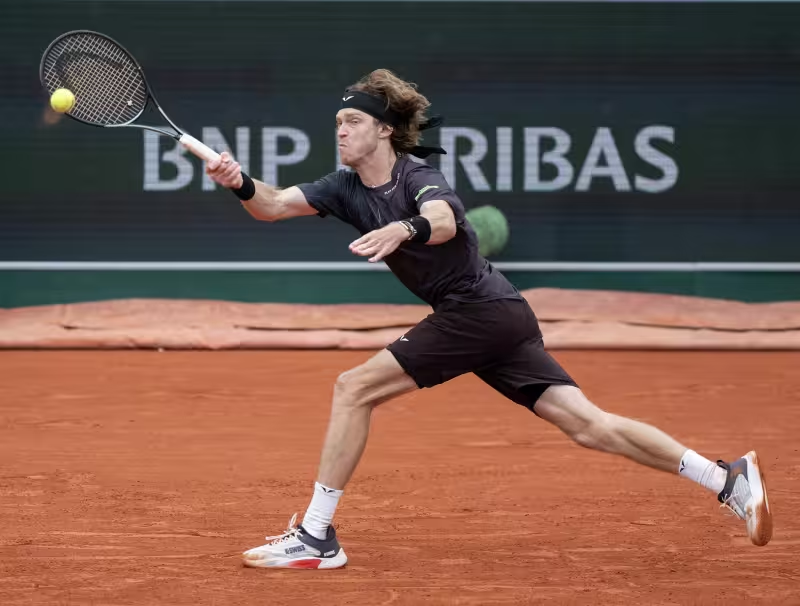
Arthur Fils defeated Andrey Rublev 6-2, 7-6 to win the Barcelona Open on Sunday, ending a two-year title drought and capturing the fourth trophy of his career.
The scoreline underlined both control and resistance: a dominant opening set followed by a tight second set that went to a tiebreak. The victory was Fils’s first tour-level title since the Japan Open in 2024 and came after a long break from competition; he had been sidelined from July 2025 until February 2026 by a back injury sustained at last year’s Roland Garros.
Since returning to the tour he has not been easing in. Fils reached the final in Doha and the semifinals at Indian Wells, and his win in Barcelona lifted him five places to 25th in the world — a jump that materially improves his standing heading into the rest of the clay swing.
Andrey Rublev, the beaten finalist, was magnanimous. He congratulated Fils and his team and family, called Fils’s level of play ridiculous and said that coming back from roughly six months out and performing at that standard was extraordinary; Rublev added he was genuinely happy for Fils and that the victory was well deserved. Rublev himself remains a proven winner, having last lifted a title at the Qatar Open in 2025.
The Barcelona triumph carries clear numerical weight. It is Fils’s fourth career title and his first in two years. The win also produced immediate ranking movement — five places upward to 25th — and gives him momentum after a comeback that included a Doha final and an Indian Wells semifinal. Those results, together with this trophy, suggest his layoff has not erased the form that brought him success in 2024 and late 2025.



Context matters here: Fils’s break from July 2025 to February 2026 followed the back trouble he picked up at Roland Garros, yet his results since returning show a rapid rebuild of form. Winning in Barcelona does more than add a trophy; it strengthens his position through the clay season, reduces match-of-the-week pressure and alters the practical draw-feasibility for opponents who had expected him to be returning slowly.
There is tension beneath the neat arc of comeback and reward. The 6-2, 7-6 score captures it — clear control, then a set narrowly decided — and it came against an opponent who, despite falling short here, is no easy marker. Rublev’s public praise underlines that Fils beat not just an opponent but one whose recent résumé still includes a 2025 title. For Fils, the challenge now is to turn this one-day peak into a sustained run across several weeks of clay events.
The practical next step is straightforward: the Barcelona title should improve seedings and confidence across the remaining clay tournaments and gives Fils breathing room in the rankings. Fans tracking the shifts will see the change reflected in live scoreboards and ranking lists; the result and his climb to 25th are immediate and measurable outcomes of a comeback that has gone from hopeful to tangible.
After time away with a back problem, Fils has not only returned — he has won again. This Barcelona victory is less an ending than a checkpoint: it proves he can win at the tour level after injury and positions him as a real contender for the rest of the clay swing.