



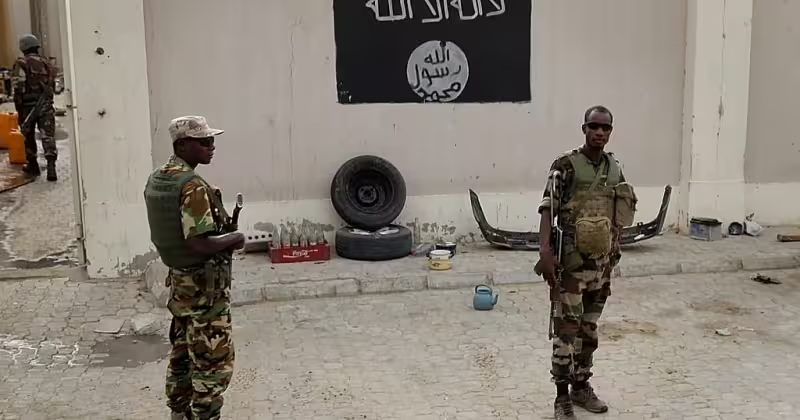
Dozens of Nigerian fishermen are feared dead after Chad’s military launched air strikes on Boko Haram militants in the Lake Chad region, local community leader Abubakar Gamandi Usman said, estimating that more than 40 fishermen had died.
No bodies had been recovered when the incident was first reported, and witnesses said panic spread on Friday as the Chadian air force circled overhead and both fighters and fishermen tried to flee by boat.
Chad’s presidency said on Sunday it had carried out retaliatory "intensive air strikes" on Boko Haram strongholds after what it described as "unjustified attacks" on Chadian bases. The presidency framed the strikes as a direct response to assaults last Monday and last Wednesday that reportedly killed at least 24 soldiers and two generals.
Usman, who speaks for fishing communities around the islands of Lake Chad, said fighters and civilians share the same narrow waterways and landing points. "After Boko Haram attacked Chadian forces, they retreated to islands they operate from. Fishermen also inhabit these islands," he said, adding that some fishermen may have been hit in the strikes while others drowned while fleeing in overloaded boats.
A separate report quoting field contacts said there were "huge casualties" among fishermen operating in the area. Officials and community leaders warned that recovery is complicated by the swampy terrain and the fact that militants control movement to and from the fishing sites.
The violence that prompted the strikes follows a week of deadly raids on Chadian forces. Military sources say a raid on the Barka Tolorom military base along Lake Chad killed at least 24 Chadian soldiers. The spree of attacks this week led authorities to declare a 20-day state of emergency in the violence-hit Lake Chad region on Thursday, after at least 26 army personnel, including two senior generals, were reported killed in ambushes.
Government spokesman Gassim Cherif said the review that led to the emergency cited renewed Boko Haram attacks, civilian displacement and growing threats to people and property. The presidency said its operations were intended to degrade militant strongholds after repeated attacks on security forces.
Context is stark: the Lake Chad basin — a vast mosaic of waterways and marshes shared by Nigeria, Chad, Niger and Cameroon — has long been a stronghold for both Boko Haram and the Islamic State West Africa Province. Militants routinely control canoes and landing points, transport fishermen to fishing sites and collect taxes from them, according to local accounts.
The strikes and resulting reported deaths expose a persistent and painful contradiction in the government’s response. Chadian forces say they are striking back at militants who killed soldiers and senior officers. But Chadian military operations have previously been accused of causing civilian deaths in Lake Chad; in October 2024, the air force was said to have killed dozens of Nigerian fishermen during strikes that targeted Boko Haram fighters on Tilma Island. That episode left communities distrustful and fearful that sweeping air operations will not reliably distinguish fighters from civilians.
The most consequential question now is whether the retaliation that Chadian leaders say is necessary to protect bases will instead deepen a humanitarian crisis among lakeside communities that rely on fishing to survive. If more than 40 fishermen have been killed and bodies are not recovered, families will be left without breadwinners and entire villages face fresh displacement. Chad’s declaration of a 20-day state of emergency signals further military operations, but history suggests those operations risk repeating past errors unless commanders change tactics on the ground.
Abubakar Gamandi Usman, who opened this report by naming the scale of the feared losses, said the fishermen’s dependence on the same islands used by militants leaves them exposed whenever air operations intensify. The strikes may silence immediate threats to Chadian bases, but they also threaten to sever the fragile livelihoods of the people who live on Lake Chad’s islands.