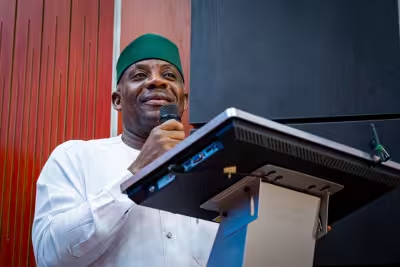





Chidiebere Justice Mark, popularly known online as Justice Crack, was remanded in the custody of the Department of State Services after the Federal High Court in Abuja heard a three‑count charge on Monday.
Mark was arraigned before Justice Joyce Abdulmalik on allegations that he circulated a viral video and accompanying statements via his X handle @JusticeCrack about the feeding of Nigerian Army personnel, conduct the prosecution says was false and likely to stir public unrest.
The charge sheet quoted the defendant directly, saying in part: "That you, CHIDIEBERE JUSTICE MARK, adult, male, of Plot 88 Sabon‑Lugbe, Abuja, on or about the 28th day of April, 2026, in Abuja, within the jurisdiction of this Honorable Court, did circulate information to the public through your social media handle @JusticeCrack, regarding alleged inadequate feeding of Nigerian Army personnel, which you know the said information to be false but posted it for the purpose of causing annoyance, ill will, and hatred, especially among the citizens who hold divergent views and thereby committed an offence contrary to and punishable under Section 24 (b) of the Cybercrimes (Prohibition, Prevention, etc) Act, 2015, as amended."
The prosecution presented a three‑count information that cites Section 24(b) of the Cybercrimes (Prohibition, Prevention, etc) Act, 2015, for allegedly circulating known false information; a second count alleging publication and circulation of material about the Nigerian Army that generated widespread negative reactions and was likely to cause fear and breach of the peace; and a third count, under Section 509 of the Criminal Code Act, accusing him of attempting to commit a felony through a derogatory video and statements.
That the case involves statutory sections of the Cybercrimes Act and the Criminal Code, a viral video, and statements said to have been posted "on or about the 28th day of April, 2026" gives the prosecution a clear legal framework to pursue a trial that Justice Abdulmalik has set for May 25, 2026, when a formal bail application may also be heard.
Context for the charges, the record says, is a post and video about soldiers' feeding and welfare that the prosecution says provoked a wave of negative reaction online and could threaten public order. The army has described Mark’s interactions with soldiers as wider than a single complaint: the service provided the court a preliminary report and statements attributed to Appolonia Anele that said, "…preliminary report reveals that the soldiers discussed a wide range of issues with Justice Chidiebere, who seemed to be inciting soldiers to create discontent within the system" and, as an example, pointed to "a chat bothering on subversion which Chidiebere had with the soldiers."
The army told investigators it arrested Mark alongside some soldiers last week after he shared their complaints about feeding and welfare, and that the contacts appear to have suggested a risk to discipline. "It is important to state that a situation where civilians cultivate vulnerable personnel towards acts of subversion has far‑reaching implications on discipline and national security," Anele wrote in the material before the court.
That version of events collides with what media reports say happened after the posts: Mark pleaded not guilty to the three counts, and his counsel, Marshall Abubakar, made an oral bail application in court on Monday that the judge ordered filed formally for consideration. Despite that, Abdulmalik ordered Mark remanded in DSS custody pending the May 25 hearing.
The tension in the case is plain: the prosecution frames the posts as deliberate falsehoods and potential sparks of unrest; the defence, through its not‑guilty plea and a request for bail, positions the matter as a contest over speech and evidence. The fact that the army carried out the initial arrest and handed custody to the DSS sharpens the friction between military discipline, intelligence procedure and the criminal courts.
The most consequential question now is straightforward: will the court grant Mark bail when he returns on May 25, 2026, and if it does not, how long will he remain in DSS custody while a trial proceeds on cybercrime and criminal‑code counts tied to a viral video? The answer will determine whether this case becomes a test of how far the law will go when social posts draw military scrutiny — whether justice cracks under the strain or holds to the legal thresholds the prosecution must meet.