




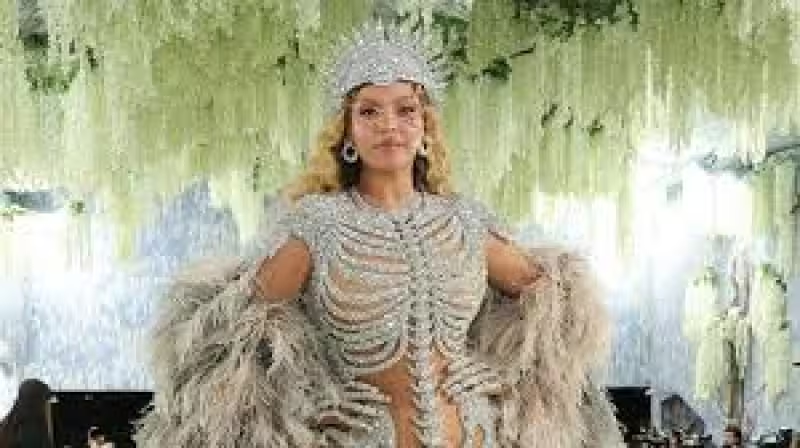
Beyoncé made her long‑anticipated return to the Met Gala on May 4, 2026, appearing at the Metropolitan Museum of Art in New York as a co‑chair and stepping onto the carpet in a skeletal gown for the event themed Fashion is Art.
It was her first Met Gala appearance in one decade — she had last attended in 2016 — and she shared the formal role with Venus Williams, Nicole Kidman and Anna Wintour. Beyoncé said, "it feels great to be back at fashion's biggest night alongside her daughter and husband," and photographers captured her arrival alongside family as the crowd watched.
The night was densely starry: Rihanna, Sabrina Carpenter, Anne Hathaway, Heidi Klum, Madonna, Cher, Margot Robbie and Charli XCX all appeared at the gala, and Rihanna arrived just as it looked like the red carpet activity was finished. The scale of celebrity attendance underscored the Met Gala's pull as the museum's signature fundraiser and one of fashion's most visible stages.
As a co‑chair, Beyoncé occupied a dual role — a public presence on the carpet and a formal anchor for the gala's theme. The 2026 dress code, Fashion is Art, celebrated the Metropolitan Museum of Art's spring costume exhibition and framed the evening's looks as part of a museum conversation about garments as gallery objects. Coverage of the theme and the exhibition is available in the organization's reporting on the event ( and in features tied to the Costume Art opening (


The visual weight of Beyoncé's skeletal gown became part of the evening's shorthand: a single image that threaded her return to the gala with the curatorial argument of the museum show. Her placement as a co‑chair alongside three other well‑known figures signaled that her presence was not merely red carpet pageantry but an institutional role for the night.
That role, and the gala's high profile, produced a parallel note of friction. Activists staged protests over billionaire Amazon founder Jeff Bezos's involvement as a sponsor of the event, turning elements of the night into a site of public contest. The protests cut against the celebratory mood and highlighted an unresolved tension between fundraising, sponsorship and the museum's public mission.
There was also an odd, mundane tension on the carpet itself: after hours of arrivals, several major names appeared as the televised red‑carpet activity was winding down, a moment that blurred the choreography of fashion coverage. Rihanna's late arrival, in particular, came just as photographers and onlookers were beginning to pack up, demonstrating how timing still shapes which images dominate the night.
For beyonce, the return was unmistakable in scope — a reentry into an institutionally framed role after ten years away. Her co‑chair status, the family‑fronted entrance and the immediate visual statement of the skeletal gown all underline a clear outcome: she reclaimed a public, central place in the Met Gala's cultural choreography. In short, her appearance did what co‑chairs are meant to do — it refocused attention on the gala's theme and on the museum's exhibition, while guaranteeing that conversation about the night would orbit back to her presence.