




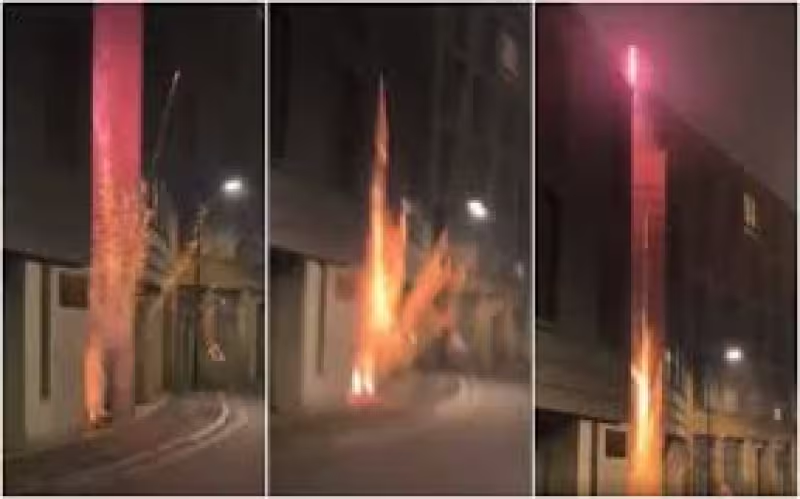
Diego Simeone said the team had moved hotels for a cheaper rate. At around 1.30am on Tuesday, fireworks were set off outside the Shoreditch hotel where his Atletico Madrid squad were staying, Spanish outlets reported.
Marca said the first salvo of fireworks woke players and staff at about 1.30am and that further loud noises arrived roughly 20 minutes later. According to Marca, at least one member of the squad was disrupted by the disturbance. Atletico flew to London on Monday and trained at the Emirates Stadium later that afternoon ahead of the second leg of their Champions League semi-final against Arsenal.
Spanish media report that Atletico notified UEFA of the incident. The club also highlighted how easily those responsible were able to get close to the hotel, according to those reports. Atletico had chosen Shoreditch for this trip rather than the Marriott Hotel in Regents Park, which they used in October before losing 4-0 to Arsenal in the group phase.
The timing of the fireworks — in the small hours and within the squad's hotel perimeter — is likely to draw scrutiny because the fixture is the second leg of a tie that finished 1-1 in Spain last week. Arsenal, who beat Fulham 3-0 on Saturday and host the match after Manchester City's 3-3 draw at Everton, arrived at Wembley-level focus on the fixture and on having options for selection: Arsenal manager Mikel Arteta said, "Great [to have them back], because we need options, we need the capacity to play different games tomorrow, whether it's from the start or after. So it's really, really good news for us to have them both back."



The immediate factual weight in this story is narrow and specific: fireworks at 1.30am, more noise 20 minutes later, at least one squad member affected, and a report to UEFA, according to Spanish outlets. Standard Sport, however, understands that UEFA has no jurisdiction over incidents that occur away from the stadium. The same outlet says any follow-up would therefore fall to local authorities and police in London, not the competition organisers.
That contrast — Atletico's reported approach to UEFA and the sensible legal boundary pointed out by Standard Sport — is the story's friction. Clubs can and do alert governing bodies when their teams are targeted, but if governing bodies cannot act beyond stadium grounds, a formal complaint to UEFA may be symbolic unless matched by a criminal inquiry by London police. Atletico, according to Spanish reports, also drew attention to how close the perpetrators were able to get to the hotel.
The broader backdrop is practical and immediate: this disturbance happened on the night before a high-stakes semi-final second leg that follows a 1-1 first match in Spain. The squad had trained at the Emirates Stadium on Monday afternoon and were due to play Arsenal on Tuesday, creating a narrow window for any investigation before kick-off. Atletico's decision this trip to base themselves in Shoreditch, rather than the Regents Park hotel they used in October, will now be a point of scrutiny after Simeone's remark, "The hotel was cheaper. That's why we changed."
The most consequential unanswered question is straightforward: whether London police will treat the incident as a security breach significant enough to alter arrangements for teams in the area. Given Standard Sport's understanding that UEFA cannot act on events away from the stadium, the practical outcome is likely to rest with local authorities, not European football's governing body. For Simeone and his players, the episode will be judged by one measure alone — whether it affected performance in a match that follows a tense 1-1 draw and carries a place in the Champions League final.