



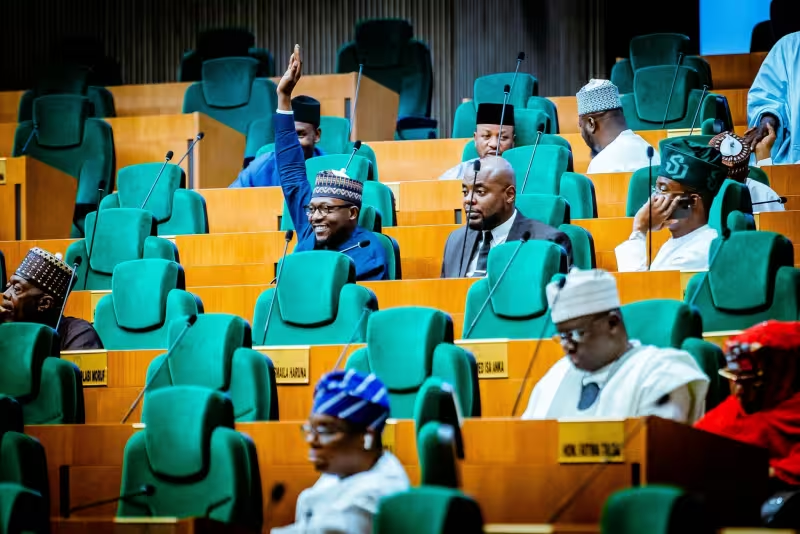
The House of Representatives on Tuesday asked the federal government to suspend all bilateral agreements with South Africa after renewed xenophobic attacks left at least two Nigerians dead. Lawmakers adopted the resolution after debating a motion of urgent public importance sponsored by Donald Ojogo.
The dead were identified as Ekpenyong Andrew and Amaramiro Emmanuel. Andrew was arrested on April 19 in Pretoria after an alleged altercation with police officers, and his body was later found in a morgue. Emmanuel died on April 20 from injuries sustained after he was beaten by personnel of the South African National Defence Force.
Ojogo told the chamber the violence had reached an alarming rate and said Nigerians were being selectively targeted. He described the attacks as a demonstration of ingratitude and warned that the trajectory in South Africa was a recipe for anger and reprisals in Nigeria, making prevention urgent.

The resolution went beyond a call for suspension. The House asked the federal government to review all bilateral agreements with South Africa, including trade and aviation treaties, and to consider targeted economic measures such as a temporary halt to business permits for new South African companies and a review of tax incentives for existing South African firms in Nigeria. Those measures are to remain in place until South Africa takes demonstrable steps to stop the attacks, prosecute those responsible and compensate victims.
Lawmakers also directed the committees on foreign affairs, diaspora and cooperation and integration in Africa to work with the Nigerian high commission in Pretoria. They were told to set up a 24-hour emergency response desk and legal aid fund for distressed Nigerians in South Africa, and to work with the federal government on a public evacuation contingency plan for Nigerians in volatile provinces.
Benjamin Kalu, who spoke during the debate, called the House position a very significant one and said many nations are stronger than they are today because they stood for one another. He added that an attack on any Nigerian anywhere is an attack on Nigerians everywhere, and said South Africans who were liberated should not place other Africans in bondage, calling those facts. The House’s move turns that argument into policy pressure, and it now falls to the federal government to decide how far it is willing to go before Pretoria acts.
The motion was triggered by the latest wave of xenophobic attacks in South Africa, where tensions escalated last month. It also reflected lawmakers’ view that Nigeria’s own anti-apartheid history gives the issue moral weight beyond a normal diplomatic dispute.