




The Nigerian federal government has invited Bobby Moroe, the acting high commissioner of South Africa to Nigeria, for a meeting at the federal ministry of foreign affairs headquarters in Abuja on Monday to raise alarm about recent xenophobic attacks against Nigerians in South Africa, the ministry said.
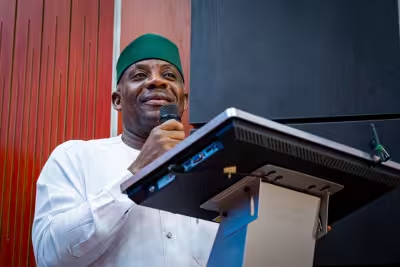
Kimiebi Ebienfa, speaking for the ministry, said the purpose of the engagement is to formally register Nigeria’s deep concern about events she warned could harm the historically cordial relations between the two countries and to press for immediate steps to protect Nigerian citizens. She said the talks will concentrate on demonstrations by various groups in South Africa and documented instances of mistreatment of Nigerians and attacks on their businesses.
The urgency follows a string of violent incidents that have left at least two Nigerians dead since anti‑foreigner tensions rose in South Africa last month. The Nigerian Consulate General in Johannesburg confirmed that Amaramiro Emmanuel died on April 20 from injuries he allegedly suffered after being beaten by personnel of the South African National Defence Force, and that Ekpenyong Andrew was apprehended on April 19 in the Booysens area of Pretoria; Andrew’s body was later found at the Pretoria Central Mortuary.
The Nigerians in Diaspora Commission has urged South African authorities to investigate and prosecute those responsible, while Nidcom has told the government it has received reports of Nigerian pupils afraid to attend school and business owners too fearful to open their shops because of targeted attacks, looting and harassment. The federal government has urged the public to remain calm and reiterated that it is committed to protecting the rights and well‑being of Nigerian citizens living in South Africa.

Practical fallout is already under way. The Nigerian Consulate in South Africa, working with the Nigerian Citizens Association in South Africa (NICASA), has offered a free repatriation flight for any Nigerian who wishes to return home permanently. Frank Onyekwelu, involved in the repatriation effort, said the process is ongoing and that many Nigerians have signalled interest in coming back.
Those details frame the diplomatic meeting as more than a routine protest note. Nigeria is demanding answers about both the conduct of demonstrations and the role of security forces, and it is tracking concrete human costs: names, dates and the pathways that led to two deaths in Pretoria and elsewhere. That specificity is what gives the ministry’s summons weight and forces South African officials to respond to particular allegations rather than general outrage.
The summons comes against a broader backdrop of anti‑foreigner protests across South Africa that surged last month and have prompted alarm in other West African capitals as well; Ghana, for example, has also summoned South Africa’s acting high commissioner in Accra over the attacks. Within Nigeria, the flow of people seeking to leave, and reports of pupils and shopkeepers staying away from schools and businesses, suggest the crisis has moved from isolated incidents to a community‑wide fear that officials must address.
There is clear tension between Nigeria’s call for calm and the hard facts on the ground. Abuja says it wants diplomatic engagement and assurances; many Nigerians on the ground are choosing to leave rather than wait for those assurances. The allegation that a Nigerian died after being beaten by members of the South African National Defence Force opens a particular crack: if true, it raises questions about the conduct of state security actors and about accountability inside South Africa.
The meeting on Monday is the immediate test. If South African officials offer prompt, verifiable steps to investigate the killings, prosecute perpetrators and secure Nigerian communities, the diplomatic pressure may ease. If they do not, expect further repatriation requests and a sharper bilateral rift. For now, Kimiebi Ebienfa’s office has made the complaint formal; what follows will determine whether this episode becomes a short diplomatic crisis or a longer rupture between two of Africa’s largest economies.