




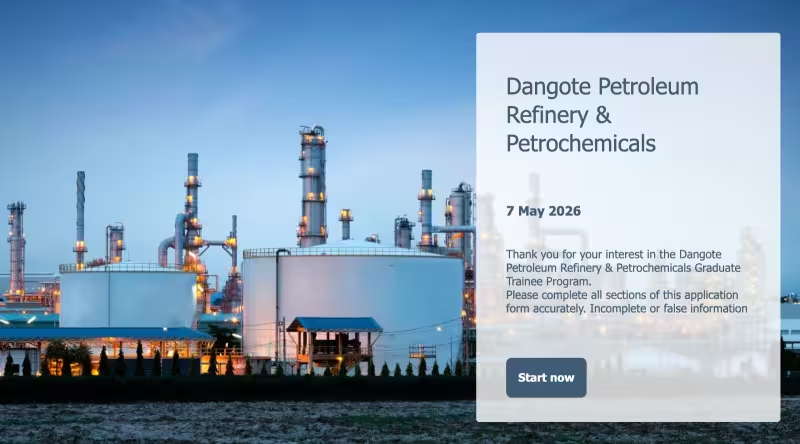
Dangote Petroleum Refinery & Petrochemicals opened applications on Thursday for its 2026 graduate trainee programme, the company said, launching an 18-month intake designed to bring recent graduates into refinery operations and support functions.
The programme is available to graduates across three categories: technical, technical support and support services. Technical applicants must hold a first degree or higher national diploma in chemical, production or mining engineering, geological sciences, laboratory sciences or biochemistry. Technical support candidates are required to have qualifications in mechanical, electrical, instrumentation or power engineering. Support service applicants may apply with a degree or diploma in accounting and finance, social sciences, humanities, business administration, law or information technology.
Applicants must meet academic thresholds—no lower than Second-Class Lower or HND Upper Credit—and must not be above 28 years old by May 31, 2026. The company described the intake as aimed at “high-potential, vibrant, and enthusiastic initiative-takers” and said successful applicants would gain hands-on experience across various refinery operations and learn from skilled professionals.
The announcement included a direct message to candidates: "At Dangote Petroleum Refinery and Petrochemicals, we are offering you the opportunity to join our 2026 Graduate Programme, where you will have a chance to learn and grow in a global business environment while supporting the growth of our organisation" and a call to action: "APPLY NOW: "



For applicants searching specifically for a dangote refinery graduate trainee role, the opening spells a clear window: the company is recruiting for a time-limited, structured programme that blends classroom and on-the-job rotations over 18 months. The refinery said the training will cover various operations inside the plant, and that mentors and experienced staff will support trainees as they move through technical and support-service placements.
Context matters: the programme is aimed at graduates seeking careers in Africa’s oil and gas industry, and the combination of academic thresholds, a strict age cap and a defined programme length frames the refinery’s intake as one targeted at early-career professionals. The requirements attempt to narrow the pool to candidates who meet the company’s academic standard and its age eligibility, while the training promise points to skills transfer and workforce development inside the business.
There is an inherent tension between the refinery’s stated desire for energetic, initiative-taking recruits and the rigid eligibility rules it has set. The age ceiling—no older than 28 by May 31, 2026—and the minimum degree classifications exclude older graduates and those whose transcripts fall short of Second-Class Lower or HND Upper Credit, even if they bring relevant experience or different forms of potential. That tension raises a practical question for applicants: the programme markets itself as growth-focused, yet it is structured so narrowly that many otherwise capable candidates will be screened out before the work begins.
What happens next is straightforward for hopeful applicants: those who meet the listed academic and age criteria can submit applications through the link the company provided, and the refinery will select a cohort to enter the 18-month programme. For the refinery, the likely outcome is a cultivated pipeline of early-career staff trained across refinery operations and support functions; for rejected applicants, the policy choices evident in the criteria will shape who can access on-site learning and who must seek alternatives.