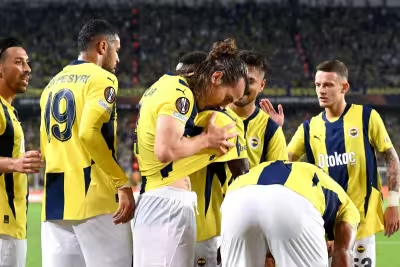




Deportivo Alavés took the field at the Carlos Tartiere on Sunday for a match that coach Quique Sánchez Flores framed, a day earlier, as the club’s chance at something big: "El premio puede ser extraordinario."
Sánchez Flores spoke on Saturday, 16 May, ahead of what was presented as the team’s third match of the week and warned that the squad remained affected by exertion: "El cansancio fue importante y es patente todavía." He tasked his players with a clear, low‑margin game plan: "Hay que intentar ser sólidos y certeros en las dos áreas y hacer un partido muy serio."
The numbers underlined the moment. Local reporting said most of the Deportivo Alavés following had already reached central Oviedo after 2 p.m. on Saturday; El Correo reported 700 abonados held tickets for the away section and that the club provided 8 buses free of charge to move supporters who travelled to back the team "in a key moment when permanence in Primera División was at stake." The match at the Carlos Tartiere was scheduled for 19.00 hours on Sunday.
Context made the fixture more than a routine trip. The game was framed as Alavés’ third in seven days, a stretch Sánchez Flores highlighted to explain both urgency and wear: the coach said the players would arrive fit enough to compete but that fatigue was still visible. He also focused on what matters now for his side and would not be drawn into other calculations: "Las demás cuentas no nos interesan."



Tension came from two directions. Oviedo, already relegated according to Sánchez Flores, was primed to react in front of its fans and to mark the occasion of a departing figure: "El Oviedo intentará demostrar rebeldía ante la situación de haber perdido la categoría y tendrán emoción al despedir a un jugador muy importante como es Cazorla." That farewell risked creating an emotional atmosphere at the Carlos Tartiere. At the same time, Sánchez Flores admitted the physical toll on his own squad: balancing the need to be "sólidos y certeros" with the reality that "El cansancio fue importante y es patente todavía" created the clearest friction of the weekend.
For Alavés the stakes were explicit. The away support had travelled in force, according to El Correo, and the coach repeatedly narrowed the task to execution rather than arithmetic: win the moments in both boxes and keep focus. His shorthand for the task was simple — secure, accurate, serious — and he underlined that the team could win a very large prize if they managed those details: "El premio puede ser extraordinario."
What happens next is straightforward and decisive: how Alavés manages fatigue and the charged atmosphere will determine whether the club can protect its position in the top flight. Sánchez Flores set the terms before kickoff — ignore the other tables, absorb the emotion in the stadium, and deliver a disciplined performance. If Alavés can do that, the coach’s belief that the reward might be "extraordinary" will have been earned; if they cannot, the same fatigue he warned about will be the clearest reason why.
The weekend’s fixture — captured in local reporting and in Sánchez Flores’s briefings — left the question everyone will now watch for: can a weary Alavés be as clinical as the coach demands against an Oviedo side fighting to sell a farewell to Cazorla with pride? The answer will decide the immediate fate the coach said matters most.