



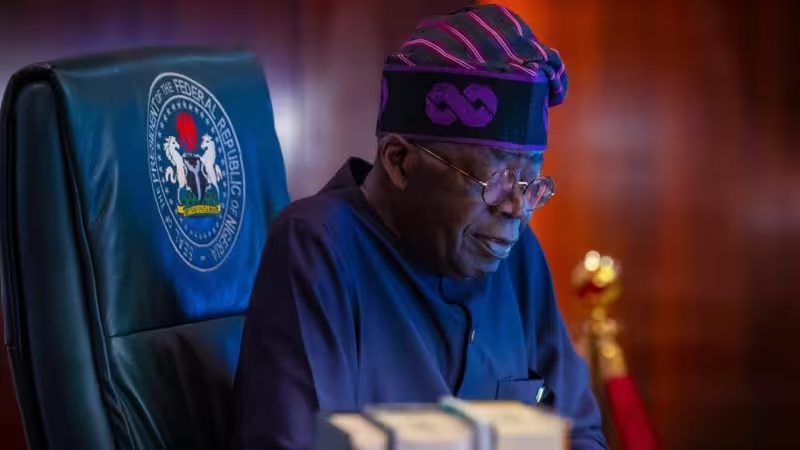
President Bola Tinubu on May 11, 2026 approved the appointment of Major General Adeyinka Fadewa (retd.) as Special Adviser on Homeland Security, a move the presidency said is meant to tighten internal security coordination and intelligence-led operations.
The appointment was announced in a circular signed by Senator George Akume and issued by Dr Ibrahim Kana. The statement described Fadewa as a highly decorated retired military officer with more than three decades of experience in military and intelligence operations, national security strategy, counter-terrorism and international security diplomacy. It also said he played a key role in shaping Nigeria's intelligence coordination framework between 2015 and 2021.
The timing matters because Tinubu told a Plateau State delegation at the State House on April 29 that his administration would do whatever was necessary to end the cycle of killings. That pledge came amid rising pressure on the government over insecurity, and the new appointment is being read in that light.


A presidency source said service chiefs and the intelligence community were unhappy with Nuhu Ribadu, the National Security Adviser, over what they saw as his growing involvement in operational matters. The source said the concern was that the NSA should coordinate security and intelligence agencies, synthesise information and advise the President, not step into the field. The same source said an ONSA tactical team was now operating on the street, calling it something that had never happened before.
That criticism has sharpened the focus on how the presidency is dividing security responsibilities. The circular presenting Fadewa's role framed it as a bid to strengthen internal security coordination, enhance intelligence-driven operations and improve inter-agency collaboration. In that sense, the appointment is less a break with the existing security structure than an attempt to widen it.
The Centre for Humanitarian and Homeland Advancement defended the move, saying modern security threats have become increasingly decentralised, asymmetric and technologically sophisticated. Maurice Ayobami said treating the appointment as an admission of failure misunderstood contemporary security management and argued that serious administrations review their structures, identify gaps and build mechanisms that improve coordination, intelligence integration and rapid strategic response. He said the special adviser role is strategic and advisory, not a command post, and is not meant to override existing agencies.
Between banditry, terrorism, kidnapping, cyber-attacks and organised crime, the government is facing a security environment that no longer fits a single chain of command. Fadewa's background in intelligence coordination suggests Tinubu wants a hand more focused on strategy than on field operations, while the pushback around Ribadu points to a system still working out who does what. The real test now is whether the new post produces cleaner coordination without deepening the turf war inside the security architecture.