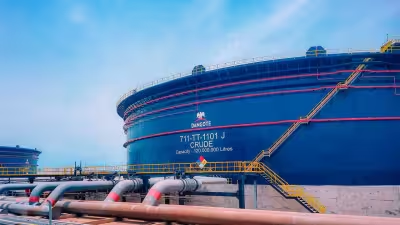




Dangote Petroleum Refinery has filed a fresh lawsuit against the Federal Government of Nigeria and the country’s downstream regulator, seeking to overturn import permits granted or renewed this month by the Nigerian Midstream and Downstream Petroleum Regulatory Authority.
Court documents say the refinery argues the approvals violate an earlier court order that directed all parties to maintain the status quo. The filing comes after the regulator recently issued six licences to marketers for the importation of 720,000 metric tonnes of petrol, a move the refinery says cuts across the law and undermines its operations.
The six marketers named in the licence allocation are NIPCO, AA Rano, Matrix, Shafa, Pinnacle and Bono. The permits cover 720,000 metric tonnes of premium motor spirit, with NIPCO expected to bring in 120,000 metric tonnes, AA Rano 150,000, Matrix 150,000, Shafa 120,000, Pinnacle 120,000 and Bono 60,000.
The Nigerian Midstream and Downstream Petroleum Regulatory Authority has said imported fuel remains necessary to complement domestic supplies. Regulators and marketers have also argued that imports are needed to ensure adequate supply and prevent shortages. Dangote says the latest permits, issued this month, do the opposite by preserving a system the refinery was built to replace.


The refinery previously withdrew a N100 billion lawsuit last July against Nigeria’s petroleum regulator and several fuel importers, including NNPC Ltd, after challenging import licences for Automotive Gas Oil and Jet A1 aviation fuel even as it said local refining capacity was coming on stream. The new case revives that fight, but with petrol imports now at the center.
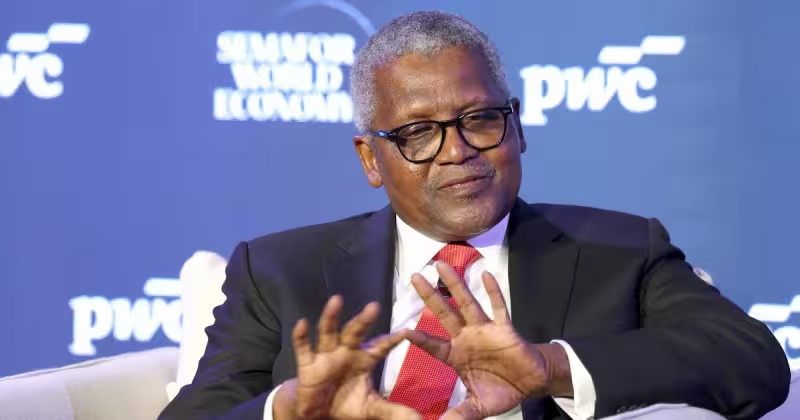
Dangote has described the plant as a $20 billion refinery with a capacity of 650,000 barrels per day, and said it is now operating at 661,000 barrels a day. In remarks tied to the dispute, Aliko Dangote said the refinery has already demonstrated its capability by processing crude at that rate, that it sources about 56 per cent of its crude from Nigeria, and that it also buys from Angola, Libya and the United States. He said the company needs to buy 21 cargoes every month and expects output to rise to 1.4 mil within the next 30 months.
The dispute lands in a country that has long depended on imported petroleum products because of years of underperforming state-owned refineries. The Dangote refinery was meant to reduce that dependence, but imports have continued as the plant gradually ramps up production and distribution capacity. That has turned fuel supply into a fight over more than barrels and licences: it is also about market competition, pricing power and who controls the flow of petrol in Africa’s biggest economy.
The key question now is whether the court will treat the fresh permits as a breach of its earlier order. If it does, the latest round of import licences could be tested just as the refinery pushes to prove it can meet domestic demand on its own terms.