



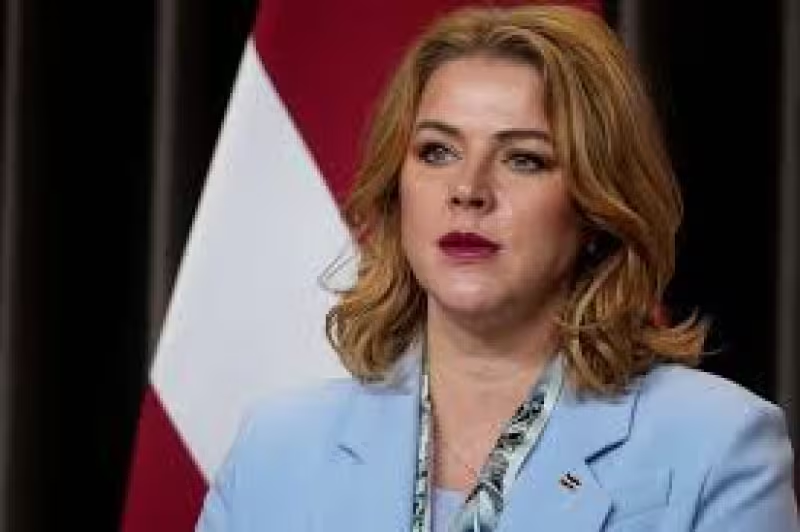
Latvian Prime Minister Evika Silina resigned on Thursday after a political crisis sparked by Russian‑bound Ukrainian drones that strayed into Latvian territory and exposed splits inside her governing coalition.
Silina, who was appointed prime minister in September 2023 and led a three‑party coalition, announced her departure after she fired Defence Minister Andris Spruds last week following two drones that crashed in eastern Latvia and prompted the Progressives party to withdraw its support.
The immediate cause of the collapse was the drone incursion on 7 May, when three drones entered Latvian airspace: one crashed to the ground, a second struck an empty oil product storage facility near the town of Rezekne, and a third flew in and out of Latvian airspace. There were no casualties or injuries.
Local residents also criticised the official response as delayed and insufficient, saying the cell broadcast alert system was not activated for an hour after one drone crashed near Rezekne. The complaints accentuated political pressure on Silina and her ministers, and helped turn a defence lapse into a coalition crisis.
Silina used blunt language in announcing her resignation. "I am resigning but I am not giving up," she said, and added that "something went wrong. We cannot afford for this situation to continue." She also stressed Latvia's defence commitments, noting that the country spends 5% of its GDP on national defence and that responses to security failures "require clear results."
The sacking of Spruds last week — after two drones crashed in eastern Latvia — triggered the Progressives party to pull its backing for the three‑party government, collapsing the coalition months before a planned general election in October. Silina earlier accused opponents of turning a personnel dispute into a political emergency, saying, "Seeing a strong candidate for the post of defence minister... political windbags have chosen a crisis."
Latvia has been beefing up its military posture in recent years because of concern about potential Russian aggression. A year after Moscow launched its full‑scale invasion of Ukraine, Latvia officially reintroduced compulsory military service; Silina's government had been steadfast in supporting Ukraine while increasing domestic defence capabilities.
The drone incidents and the domestic fallout exposed a tension between the government's public posture on security and questions about the speed and effectiveness of its incident response. Residents' accounts of delayed alerts and the failure to activate the cell broadcast system for an hour after the crash near Rezekne undercut official assurances and gave opposition politicians a ready rallying point.
Silina leaves office with the immediate process for forming a new government laid out: President Edgars Rinkevics said he would decide on the quickest possible formation of a new government on 15 May. The choice facing the president — whether to try to stitch together a new coalition now or allow a caretaker administration to steer into an October election campaign — will shape how Latvia handles defence and border security debates in the months ahead.
Her resignation makes defence the defining political issue heading into the autumn vote: a government that cannot convincingly secure territory and reassure residents faces a steep political hill. Whether the next cabinet can restore public confidence and produce the "clear results" Silina demanded is the central question for Latvian politics now.