




Palmeiras and Cruzeiro drew 1-1 on Saturday, May 16, 2026, at Arena Barueri in the 16th round of the Campeonato Brasileiro.
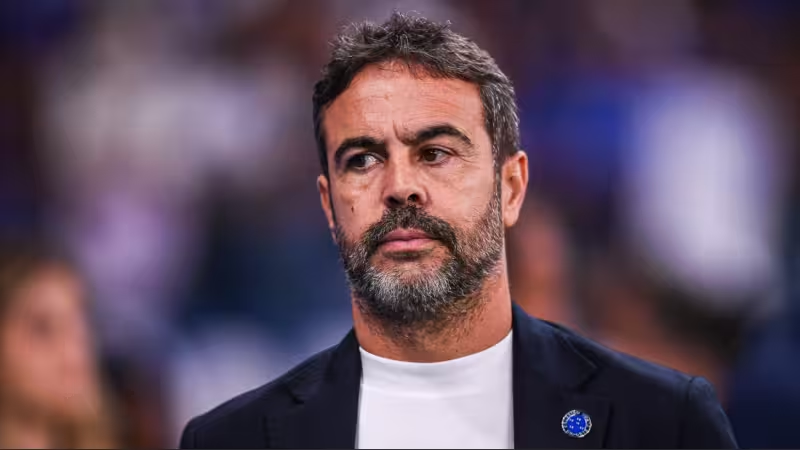
Cruzeiro coach Artur Jorge, who spent the postmatch news conference railing at refereeing decisions and his side’s disciplinary lapses, said his players must be more mature to avoid cards and questioned the criteria applied by officials.
The match produced an early Palmeiras lead when Felipe Anderson scored, and Cruzeiro stole a point when Keny Arroyo levelled the game. The referee, Savio Pereira Sampaio, booked four Cruzeiro players — Arroyo, Lucas Silva, Otávio and Matheus Pereira — a sequence that fed into the coach’s complaints after the whistle.
Palmeiras left Arena Barueri top of the table with 35 points. Flamengo, sitting second, still had two games in hand and could cut the gap to five points if it beat Athletico Paranaense later in the round. Cruzeiro, meanwhile, moved to 12th place on 20 points after salvaging a draw.
That context matters now: a single dropped point for Palmeiras keeps them ahead, but Flamengo’s games in hand mean the lead is fragile. For Cruzeiro, the draw offered a short-term lift — a late equaliser and a point — but the match exposed how disciplinary issues can shape results over a campaign.
Artur Jorge was blunt. He argued that there was inconsistency in how cards were applied and suggested some cautions would not have been given to opponents. At the same time he admitted his players were partly to blame, saying there had been moments of immaturity that handed opponents and officials opportunities to punish his team.
The tension is obvious: a coach who blames refereeing while also blaming his own players creates a split narrative. If Cruzeiro presses officials publicly, it risks looking like an excuse machine; if it focuses only on internal correction, it acknowledges responsibility but accepts the risk that officiating will remain variable. The four bookings — including two players who have been booked frequently this year, Arroyo and Matheus Pereira — underline that discipline is not simply a one-off problem.
On the field, Palmeiras showed why they are leading the league: they created the opening and did not panic when the equaliser came. But they also ceded two points that, with Flamengo’s games in hand, could matter. For Cruzeiro, Keny Arroyo’s goal was a corrective moment; for Artur Jorge it was also a reminder that style and temperament must be balanced if the club is to climb from midtable.
The clear conclusion is this: Cruzeiro’s criticism of refereeing will carry less weight if the bookings continue to cost them results. Artur Jorge must choose between channeling energy into formal complaints about officials or into tightening his squad’s discipline — because without fewer cards and clearer control, the club’s climb up the table will be hamstrung regardless of any external grievances.