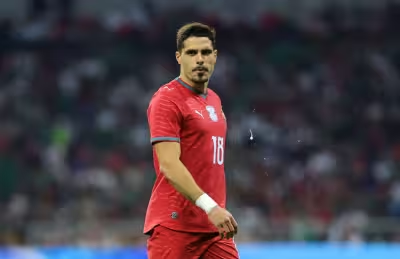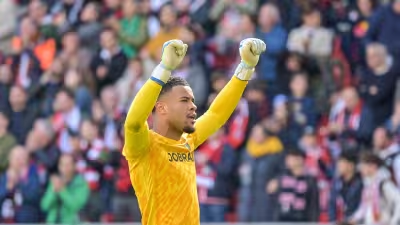





On the eve of Wednesday's Europa League final in Istanbul, Unai Emery and his Aston Villa players stood before reporters and refused to pretend the occasion is anything other than huge. Emery warned that fitness questions remain — and that the match against Freiburg is far from a foregone conclusion.
Emery, joined by captain John McGinn, goalkeeper Emi Martinez and forward Ollie Watkins, repeated that the squad will make a last call on midfielder Amadou Onana's availability: "they will decide tomorrow if midfielder Amadou Onana is fit enough to play." McGinn described the moment plainly, calling this "his 'proudest moment' as captain of the club."
The raw figures underline why: Aston Villa will contest their first European final in 44 years on Wednesday, having not reached a major continental decider since the 1982 European Cup final. Emery is taking charge of a sixth European final, a record that carries weight — he has won the Europa League three times with Sevilla and once with Villarreal, and he reached the 2019 final with Arsenal, where he lost to Chelsea.
Watkins, who has five goals and two assists in the competition this season, said the coach has changed the club's trajectory. "I can't speak highly enough of Unai Emery," he said, adding: "There's been a massive turnaround since he's come into the club. The football we are playing, the belief he has put into us as players." Watkins called the semi-final second-leg win over Nottingham Forest "an almost perfect game" and said reaching the final with this squad marks a new high after recent deep runs in other competitions.



Context sharpens both the promise and the pressure. Villa have already secured Champions League qualification for next season by finishing in the Premier League top five, so this trip to Istanbul is not the only path to a bigger stage. For Emery, though, the Europa League represents familiar ground: four wins from five finals in his continental career make him an unusual figure to be managing a club in its first European final in more than four decades.
That record is precisely what complicates the narrative. Emery himself refused to let pedigree obscure the balance of the match, saying plainly that "it would be another step forward" for Villa while warning that "to play for a trophy is difficult, it's 50-50 for us or Freiburg to win it." The coach's comments on Onana's fitness add another wrinkle: one player missing or limited in a single game could shift an otherwise finely poised encounter.
Emery's presence and past success give Aston Villa a credibility they lacked 44 years ago, and Watkins suggested the squad has responded to that leadership: "To achieve what we have with the same squad is remarkable and credit to him and the players for working hard on the training pitch to implement the game plan he is giving to us." For many supporters, unai emery's European record is now the immediate benchmark for the club's ambitions.
Wednesday's final in Istanbul will answer whether that belief, and Villa's recent form, are enough to deliver silverware. The immediate, consequential question is not philosophical: it is medical and tactical — will Onana be passed fit tomorrow, and will that decision alter the balance enough for Villa to end a 44-year wait for a European trophy?