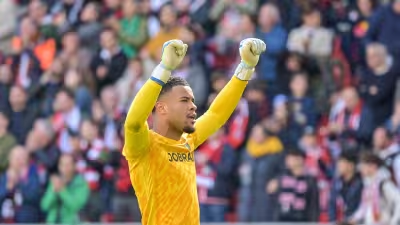





Al Najma faced Al Shabab in a Saudi Pro League Round 34 return match on Wednesday, 20-05-2026, at King Abdullah Stadium in Buraydah.
Nestor El Maestro set up Al Najma in a 5-3-2 formation led by Al-Harabi, while Noureddine Zekri matched him, sending Al Shabab out in an identical 5-3-2 with Hoedt as the focal point of their layout.
The simplest facts are the story’s weight: Round 34, a return fixture, two teams using the same numerical shape and two named coaches responsible for those choices. Those elements — the date, the place and the mirror-image set-ups — are the spine of what transpired on the pitch.
Playing at King Abdullah Stadium in Buraydah made the match the local stage for that tactical encounter. The late-season timing of Round 34 framed it as part of the league’s closing sequence; the return status underlined that the sides had met earlier in the campaign and were now confronting one another again under the same competition umbrella.

The use of the 5-3-2 by both teams is the clearest source of tension. A matched formation does more than echo a number; it forces the decisive variations to come from personnel choices, in-game adjustments and how each manager marshals his wing-backs and central spine. El Maestro’s selection around Al-Harabi and Zekri’s reliance on Hoedt meant the game was mapped as much by leadership roles as by tactical diagrams.
When two teams present the same basic shape, the narrative moves off the board and into subtler territory: who presses first, who concedes width, who alters the balance with a substitution. Those are the levers coaches can pull when the formation itself offers no clear advantage. In Buraydah, the chess match was thus between El Maestro and Zekri as much as it was between the players named on the teamsheet.
The mirrored approach also invites a particular kind of scrutiny: small margins become decisive. With both sides balanced in five defenders and three midfielders, the match structure emphasizes transitions and set pieces, and it magnifies the influence of the players given responsibility to break lines or repel danger. Al-Harabi and Hoedt were therefore more than starting names; they were intended axes for how each 5-3-2 might tilt into attack or hold for defense.
That emphasis on managerial choice is the practical takeaway from a fixture that, by the numbers, might look symmetrical at first glance. The formations tell you the intention; the implementation — the personnel, timing and tactical tweaks — tells you who executed it better. In that sense the event in Buraydah was less a contest of fixed shapes than a test of adaptation.
What follows from this is straightforward: attention shifts to how El Maestro and Zekri respond in future matches. Their choices in Buraydah will be read for tendency — whether to persist with the 5-3-2, whether to alter personnel in similar set-ups, and how they handle the in-match dilemmas that identical formations create. For now, the match stands as a compact example of late-season tactical parity, decided less by the numbers on the page than by the managers who wrote them.