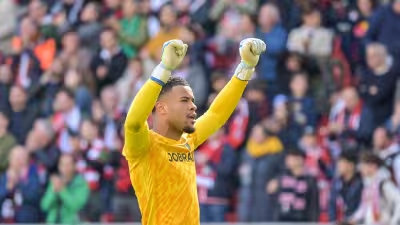





Arsenal are prepared to sell Gabriel Jesus for around £30 million this summer, setting the stage for a decision that could reshape the club’s attack and the 29-year-old striker’s next move.
Jesus, who joined Arsenal on July 4, 2022, has been a regular contributor since his arrival — 122 appearances, 31 goals and 22 assists — but his role has narrowed this season. He has been restricted to just 26 appearances across all competitions, scoring five goals and providing two assists in 913 minutes of football, and Arsenal are exploring a sale to free funds for other targets.
The financial arithmetic of any transfer is immediate. Jesus is reported to earn £265,000 per week, a wage that clubs in Italy and elsewhere view as a stumbling block. Juventus have been strongly linked with moves for Jesus, and AC Milan are reportedly interested, but both sides would face the same question: can they meet his salary demands or convince him to accept a significant pay cut?
That complication matters for Arsenal now because the club is weighing the possibility of offloading both Jesus and Kai Havertz to help fund a move for Julian Alvarez. Selling two senior forwards would create transfer capital and wage savings; selling Jesus alone at the reported figure of about £30 million would be a clear signal that Arsenal are prioritizing squad reshaping over keeping every name on the wage bill.



Ray Parlour, speaking on May 3, framed the situation from the player’s point of view: "I think Jesus might leave at the end of the season, he is at that age where he wants to be playing week in, week out." Parlour added a sharp observation on squad management: "We could lose him. We had four strikers when I played. That’s what I don’t understand." Those comments underline the practical pressure on a player who once featured far more prominently.
Context explains why a player with Jesus’s pedigree is now in the transfer calculus. Viktor Gyokeres and Kai Havertz have emerged ahead of him in Arsenal’s attack, limiting his starts. The primary reports add that constant knee problems have severely disrupted Jesus’s rhythm, contributing to inconsistent minutes and form. Taken together, reduced playing time and injury interruptions have made a move more likely from both club and player perspectives.
There is a human side to the calculation that complicates a neat business decision. Jesus has spoken openly about his emotional connection to Palmeiras and has said plainly: "I want to return there one day." That declaration reframes any European suitors’ approach — Juventus or AC Milan would be buying a player whose long-term ambitions include a return to Brazil, and who may prioritize regular football over a marginally higher salary in Europe.
The tension for Arsenal is straightforward and immediate. Jesus remains under contract until June 30, 2027, which strengthens the club’s negotiating position, but the same contract also creates a mismatch: the club can demand a fee around £30 million, yet potential buyers may balk at his reported £265,000 weekly wage. A transfer will require one of three outcomes — a buyer willing to carry his current salary, Arsenal agreeing to subsidize wages, or Jesus accepting a pay cut to secure the move he prefers.
What happens next will determine whether this is a routine summer sale or the start of a more consequential rebuild. If a club such as Juventus or AC Milan meets Arsenal’s valuation and bridges the wage gap, Jesus will leave and Arsenal will move toward their stated recruitment plans. If not, Jesus could remain on a long contract while continuing to chase regular minutes — an awkward fit for player and club alike. Either way, his public wish to return to Palmeiras keeps a return to Brazil on the table as a viable alternative if European options do not align.