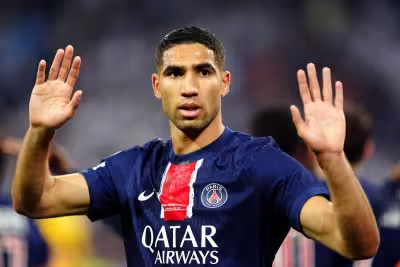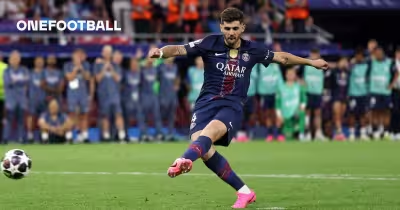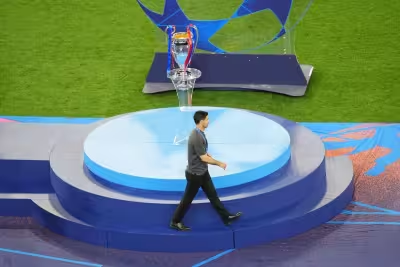





Kai Havertz scored early and Arsenal went into half-time leading Paris Saint-Germain 1-0 in the Champions League final in Budapest.
The result is the live football match headline because the final kicked off at 5pm BST (6pm local) and viewers tuning in for a decisive 90 minutes were getting a first-half that refused easy reading: a one-goal lead for Arsenal against a PSG side that dominated possession.
Mikel Arteta named Havertz ahead of Viktor Gyokeres and the selection paid off when Havertz found the net inside the opening stages, giving Arsenal something to protect. By the 38th minute PSG had registered 76 per cent of the ball yet, remarkably, still had no shots on target. That statistic underlines why the scoreline carried weight at the break — possession without penetration had left PSG with a lead problem rather than Arsenal with a deficit.


Arsenal were built to defend that advantage. The first half closed with a flurry of events in stoppage time that summed up the contest: David Raya spilled a Fabian Ruiz cross-shot but recovered possession, Marquinhos blocked a close-range effort from Havertz, and Arsenal won a corner in 45+7 minutes only for the referee to whistle for half-time before it could be taken. Across those moments Arsenal kept PSG at arm’s length while clinging to a single-goal lead.
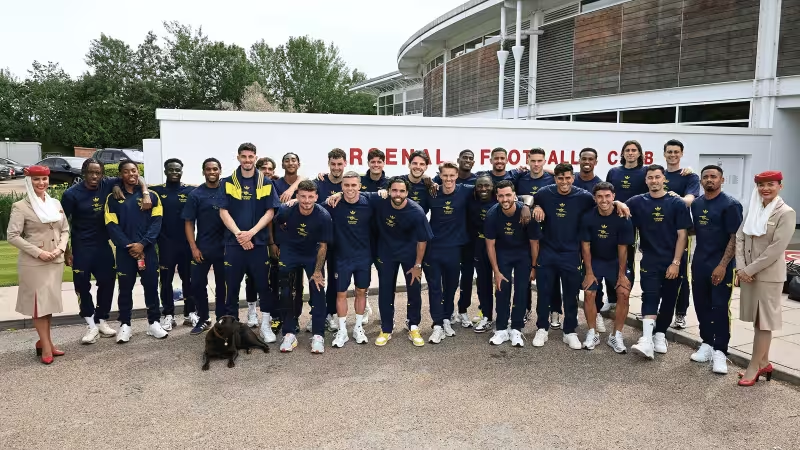
There was a scene the day before that now looks pivotal. On the afternoon ahead of the final Mikel Arteta’s first-team squad boarded a flight to Hungary and Stuart MacFarlane was on hand at the airport to photograph the players as they left for Budapest. The image of that departure now frames the live match: a squad photographed boarding a plane and, by kick-off, protecting a slender advantage in Europe’s biggest club game.
The friction at the heart of the match is straightforward and acute: PSG’s control of the ball has been overwhelming, but control has not yet produced the shots on target or the clear chances that usually force a scoreline change. Arsenal have absorbed long spells without surrendering the lead. That mismatch between volume of possession and measurable attacking threat is what gives the half its significance — and what makes the remainder of the match unpredictable.
What happens next matters to both clubs. Arsenal must defend a single-goal margin for another 45 minutes against a PSG team that, despite 76 per cent possession by the 38th minute, had failed to test the goalkeeper with a shot on target. PSG will have to convert sustained possession into genuine opportunities; Arsenal will have to convert resistance into a full-time victory. The second half was due to begin with the outcome unresolved, leaving the key question for the remainder of the live football match: can Arsenal hold the line for the full 90 minutes, or will PSG finally turn possession into the chances that change the scoreboard?