



The Senegalese Football Federation announced a sweeping reshuffle of technical teams for the national selections, and several members of its Executive Committee say they first learned of the changes through the federation’s press release rather than through the full validation process.
Souleymane Diallo, the federation’s newly named national technical director, has already begun restructuring the national teams and is reported to have been working for about ten days in coordination with FSF president Abdoulaye Fall and former director of technical national (DTN) Mayacine Mar.
The federation says the appointments were made by Fall on the recommendation of an ad hoc committee that the Executive Committee mandated at its March 19, 2026 meeting, and that the committee interviewed candidates and proposed profiles for the various selections.
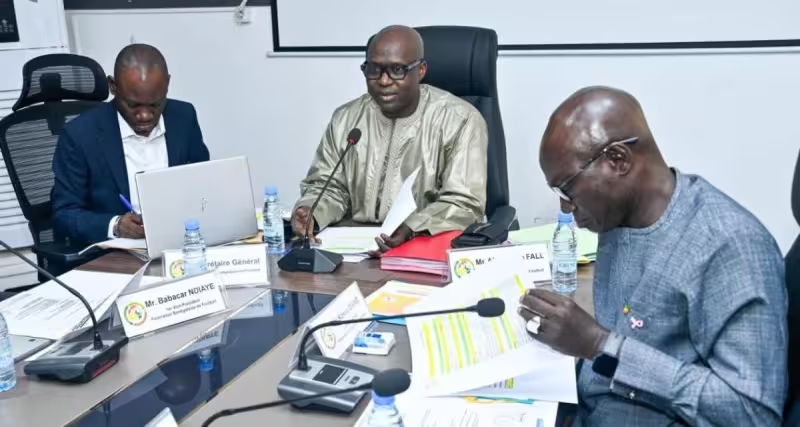
Bacary Cissé, the FSF spokesperson, said the ad hoc committee’s work led to Diallo’s selection, that the choice was presented at an Executive Committee meeting which officially confirmed the appointment, and that the announcement was made in consultation with the FSF president. Cissé also said there was no formal additional feedback sent to the Executive Committee for final validation before the public announcement.
That sequence has left some Comex members uneasy. Several said they only learned about the new appointments through the press release, and some members believe the federation did not apply its complete validation process before publishing the nominations.
Complicating the dispute is the status of Diallo’s formal appointment: his designation by the Ministry of Sports has not yet been finalized. The federation’s internal decisions are proceeding while that official confirmation remains pending.
Diallo has been working with Fall and Mayacine Mar without an official handover. The parties say their discussions and coordination allowed activity to continue because of upcoming sporting deadlines, and Mayacine Mar remains involved as an advisor to the FSF president.
Those procedural details matter because the federation’s normal practice — according to the context supplied by federation sources — is for ad hoc committee conclusions to be submitted to the Executive Committee for final validation before any public publication. The timeline here places the Executive Committee mandate on March 19, 2026, followed by roughly ten days in which Diallo began work prior to the announcement that the federation has since released.
The tension centers on whether presentation to the Executive Committee and the consultation described by the spokesperson amount to the same thing as the fuller validation some members expected. Officials who back the appointments point to the ad hoc committee interviews and the executive presentation as the chain of authority; critics point to the lack of formal, additional feedback to the Executive Committee before the announcement and to the absence of a completed ministerial appointment.
At stake now is the federation’s internal cohesion during an active restructuring of the national teams. The reshuffle proceeds under Diallo’s supervision while questions about procedure and formal ratification remain unresolved, leaving the federation to balance the practical need to meet sporting deadlines with internal demands for procedural clarity.
Unless the Ministry finalizes Diallo’s appointment and the Executive Committee either issues the fuller validation some members say was skipped or publicly accepts the process that produced the nominations, the authority behind the reshuffle will remain disputed. That unresolved legitimacy is the practical test for whether the changes will hold as the teams move toward upcoming competitions.