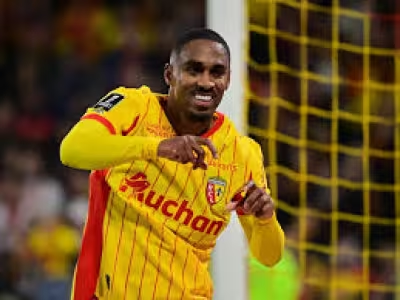




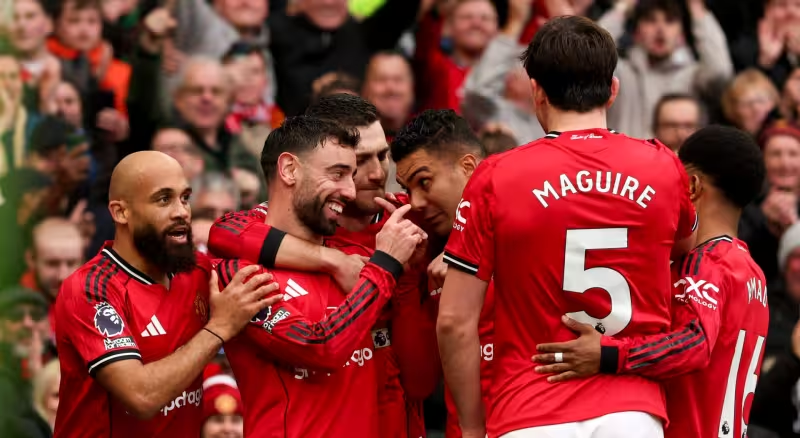
Michael Carrick has publicly backed Amad Diallo, saying he has pushed the winger further forward into his natural attacking role as the 22-year-old plays regularly for the first time at Manchester United.
Carrick offered a clear defence of the player’s contribution despite criticism of his end product. "I think yeah… numbers in terms of goals and assists, there’s an awful lot more in a game, playing in a winning team as he has, to worry about numbers," Carrick said, and added: "I think he gives the team so much. He’s got so much talent, he’s got so much ability, but his work ethic and his attitude are fantastic as well, and he’s played different roles at times. I’m a big fan of Amad."
The manager’s words arrive amid a debate over Diallo’s visible returns. The forward’s output has left a lot to be desired, and he has at times been snatching at his chances and taking on defenders with less confidence than expected. Still, Carrick pushed back on a narrow reading of statistics: "I think he’s given the team an awful lot and that’s the underbelly of what goes into the performance, not just the headline grabs, that prove a team is going to be successful. Amad’s part of that."
That defence is rooted in how the club has handled the player since Carrick arrived at Old Trafford. United’s squad has been operating at what coaches and players describe as a title-winning pace since Carrick took charge, and the manager has tried to manage Diallo through a delicate phase that followed periods of limited minutes. Before this season, Diallo’s toughest time at United came when he did not play at all; now, for the first time, he is seeing regular action.


Diallo also has experience of being trusted in other positions: he enjoyed playing under Ruben Amorim, who previously trusted him in a different role. That versatility helps explain why Carrick has shifted him around and why the manager stresses the unseen work a winger can do when he is not delivering goals and assists on the scoresheet.
The friction in the story is obvious. Carrick’s praise — for talent, attitude and work ethic — contrasts with a plain acknowledgement that the end product has been thin. The player is being pushed further forward into a role that should suit his natural gifts, yet his confidence has been dented by negative press and a spell of poor finishes. The club’s decision to keep faith while reshaping his role exposes a gap between public performance metrics and internal evaluations of contribution.
That gap matters because Carrick is not speaking as a neutral observer. By repositioning Diallo and defending his value, he is signalling that the coaching staff see more than the headline numbers show and are willing to invest minutes and responsibility in the player now that he is playing regularly. For Diallo, the immediate challenge is simple: translate the stated trust and the shift into sharper, more assured attacking play.
The most consequential fact is also the clearest: Carrick has made Amad Diallo a regular in a forward position and has publicly staked his reputation on the player’s broader value to the team. If the winger can stop snatching at chances and recover the confidence he showed under Amorim, Carrick’s gamble will look prescient. If not, the same doubts that dogged Diallo when he wasn’t playing at all may return — and quickly.