


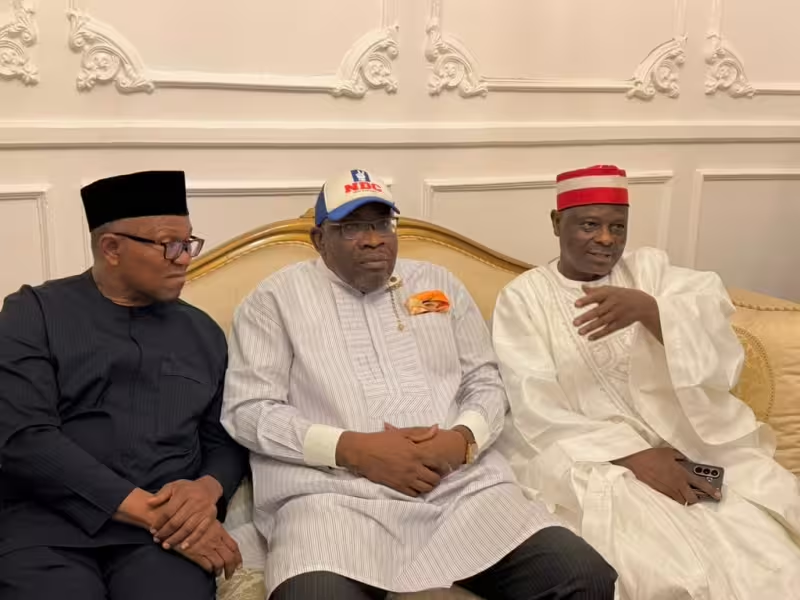
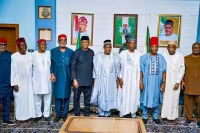
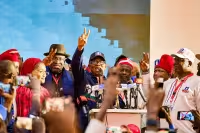
Peter Obi and Rabiu Kwankwaso formally joined the Nigeria Democratic Congress in Abuja on Sunday, taking membership cards from Cleopas Moses Zuwoghe in a move that puts two of the country’s best-known opposition figures under one party banner.
Kwankwaso said the pair came to speak with NDC stakeholders about the party and its ideology, and said they found their beliefs aligned. He urged Nigerians to register with the party before the deadline for membership registration, a signal that the NDC is already trying to turn the weekend ceremony into an organizing push ahead of the 2027 general elections.
Obi, the 2023 presidential candidate, used his remarks to press a different point: stay out of court. “Let there be no litigation. Party members, please don’t go to court. We are not lawyers. We don’t want to spend our time on litigation,” he said. He added that the party wants to build a government that will rebuild Nigeria and make the country liveable, saying it should ensure that Nigerians are living with no fear.
The appeal to discipline matters because coalition politics in Nigeria has been defined as much by internal disputes as by election campaigns. Obi also said the NDC wants to build a country where “a child of nobody can be somebody without knowing anybody,” language aimed squarely at voters worn down by insecurity, exclusion and the sense that politics works only for insiders.
There was, however, a sharper edge to the day’s politics outside the ceremony. The Nation reported that Salihu Moh. Lukman had warned Rabiu Musa Kwankwaso against plans to leave the ADC, in a letter titled “You Can’t Run Away from Yourself.” The letter, according to the report, referenced Obi and reports that Kwankwaso and Obi were exploring political realignments with the NDC and the Peoples Redemption Party. That backdrop suggests the new alignment is not only about building strength, but also about managing suspicion from within opposition ranks.
Obi’s insistence on avoiding litigation reflects a long-running problem in Nigerian opposition politics, where court battles have repeatedly drained energy from organizing. He said, “We are pleading with the judiciary. Please end cases in party so we can face the job of building a new Nigeria that is possible,” and added that he was not desperate to be president, vice president or Senate president, but desperate to see a Nigeria where people can live in dignity.
After the public appearance, Punch reported that Obi and Kwankwaso later held a closed-door meeting with NDC leaders at the Abuja residence of Seriake Dickson in Guzape. That follow-up matters because it shows the Sunday appearance was not just a symbolic handover of cards. It was the start of a deeper political conversation about whether the NDC can hold together long enough to matter in 2027, or whether the familiar forces of ambition and litigation will pull it apart before the campaign even fully begins.