




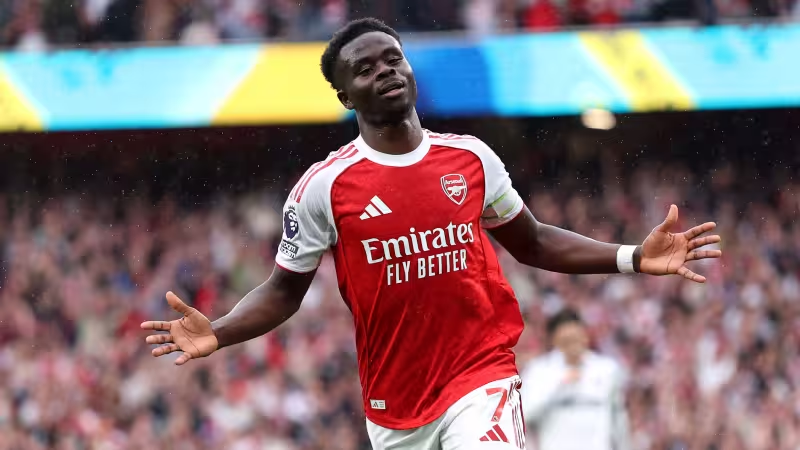
Arsenal beat Fulham 3-0 at the Emirates Stadium on April 6, with Bukayo Saka scoring and setting up a goal in the first half as he made his first start since March.
Saka’s contribution came in what was also his 200th Premier League start, a short but influential appearance that forced manager Mikel Arteta to weigh immediate impact against long-term fitness. Arteta said they had to manage Saka’s minutes — pointing out the winger had played 30-odd minutes in Madrid and 45 minutes on Saturday — and that the team must “ramp up his load” carefully because they need him available on the pitch.
The figures underline why the game mattered: a 3-0 scoreline that moved Arsenal six points clear at the top of the Premier League, and a go-ahead performance from a player returning from Achilles trouble at a moment when Arsenal have three domestic games left to close out the season. Arteta also reported that the pain that had restricted Saka is gone, that he looked loose and relaxed, and that the side saw the Bukayo they need back.
Arteta replaced Saka at half-time explicitly to manage his physical workload, a decision that acknowledged both the threat Fulham posed and the bigger calendar ahead. The substitution was not a reflection of performance — Arteta said Saka “certainly made a difference,” adding that the winger produced two actions that decided the game — but of a broader plan to protect a key player during a congested run of fixtures.



The timetable sharpens the stakes. Arsenal travel to Atletico Madrid for the second leg of their Champions League semi-final on Tuesday; the tie is level at 1-1. After that continental test, Arsenal return to domestic duty for a London derby against West Ham, with only three games remaining in the Premier League season.
That sequence — second-leg semi-final on Tuesday, then an immediate return to a title race with three league matches left — explains why Arteta spoke of Saka’s freshness and hunger being at “the highest possible height” and why he framed Saturday’s outing as a platform for Tuesday. The club needs both the short-term spark Saka provided and the medium-term assurance that he can be managed through a decisive fortnight.
The tension is obvious: a player who has been restricted by an Achilles problem produces a match-winning 45 minutes and then is withdrawn. It was the right football decision for the moment, but it leaves Arsenal and their supporters with a narrow, crucial question — can Saka sustain the load in the days ahead without relapse, and will the minutes he is allowed be enough to influence a Champions League semi-final and the closing domestic fixtures?
How Arsenal answer that will help decide more than one outcome. If Saka can be kept fit and replicate the performance he produced at the Emirates, Arsenal arrive in Madrid with a tangible attacking threat and, with six points in the league, a clear path toward the title. If not, the club’s chances in both competitions could hinge on how well Arteta’s rotation holds up under pressure — and whether the team has the depth to compensate when its most influential wide player must be conserved.