

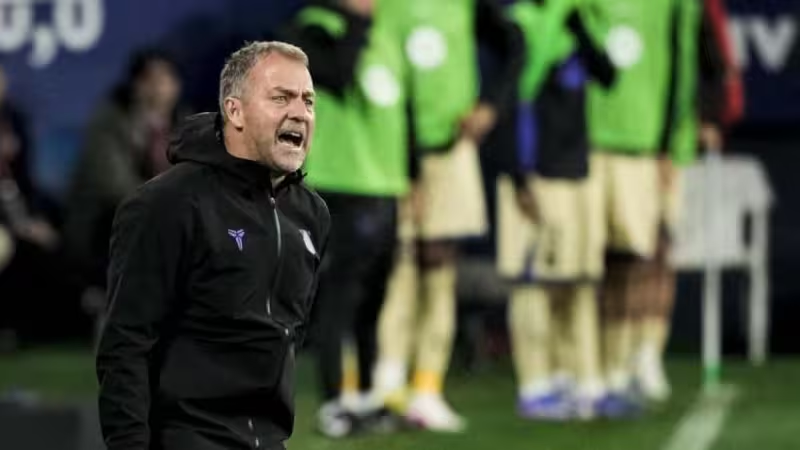
On 10 May FC Barcelona will host Real Madrid at the Spotify Camp Nou in El Clásico — a single match that can end this LaLiga race. Barcelona needs either a victory over their archrivals or a draw, because a draw would leave them 11 points clear with only three matches remaining and the title effectively secured.
The arithmetic is stark: Barcelona head into the fixture with an advantage that a single result can convert into a championship. A draw on 10 May would leave the leaders 11 points ahead with only three matches left to play; there are, by one account, 12 points still available in the chase, meaning the draw-and-clinch scenario is real. Barcelona have also been relentless in attack all season — they have scored in all 34 league matches to date and have 89 league goals, according to Mundo Deportivo — and they still have a theoretical run at 100 points if they win every remaining game.
Real Madrid will not arrive at Camp Nou as an easy opponent. They beat Espanyol 0-2 in their most recent league match, with Vinícius scoring both goals, a reminder that Madrid remain dangerous even when the title math is stacked against them.

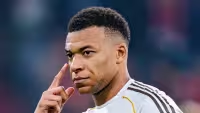
After the numbers, the story folds into ritual and history. The pasillo — the corridor of applause traditionally offered to a champion by its opponents — has a long thread in Spanish football. Sources report the first pasillo occurred in 1970 in a Copa match between Athletic Club and Atlético de Madrid. Barcelona once presented a pasillo to Real Madrid at the Bernabéu on 7 May 2008. The gesture has also broken down: Barcelona refused to form a pasillo for Real Madrid in December 2017 after Madrid won the FIFA Club World Cup. Barcelona director Guillermo Amor has said the club only complies with the tradition when it applies to a competition in which it also participated, a line that underlines how the pasillo has become conditional and contested between the big clubs.
The pasillo is not the only subplot. Barcelona still have performance targets beyond the title: they can still reach 100 league points if they win every remaining match, a rare mark of dominance. At the other end of the table of individual honours, Joan Garcia has moved to first place in the Zamora standings after his most recent outing; he has conceded 20 goals and holds a 0.71 goals-against ratio. Those parallel objectives — collective crowning, an ultra-high points total and personal awards — create different incentives for players and staff in the run to 10 May.
The tension is real and simple. On one hand the math hands Barcelona a short path to the trophy; on the other hand history and pride make the encounter a volatile one. The pasillo questions how respect and rivalry mix when a championship can be decided by a visit to Camp Nou. Real Madrid’s win at Espanyol, powered by Vinícius’s brace, shows Madrid will still press and hunt for results that could, against the odds, reopen the race.
When the teams step onto the pitch on 10 May, the outcome will not merely be a line in the standings. It will either pass the league to Barcelona or extend the suspense into the final rounds. Given the points situation and the permutations on paper, Barcelona are positioned to be crowned on that night; the only real uncertainty is how they — and their rivals — choose to mark the moment if the decisive blow falls in front of the Camp Nou crowd.