



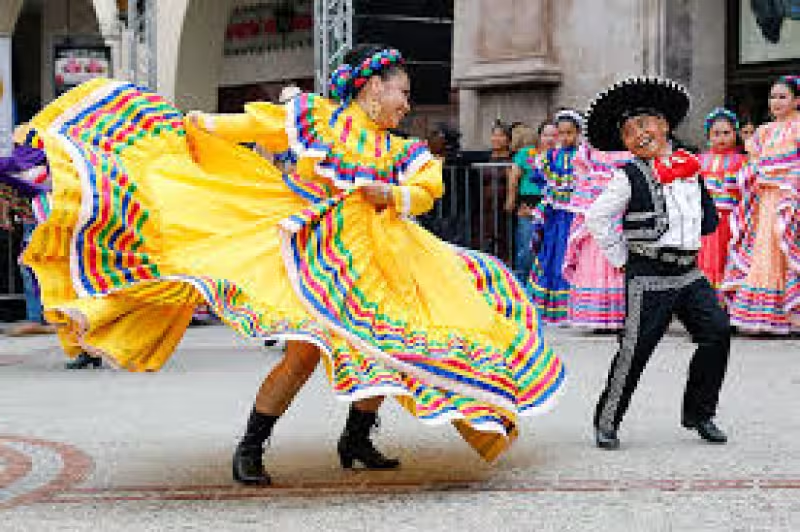
Today, on 5 de mayo — Cinco de mayo — a commemorative text marks the heroica Batalla de Puebla, the clash of May 5, 1862, when an army of Mexicans defeated a larger French battalion, the piece says.
The text recalls that Ignacio Zaragoza led the Mexican forces against an opponent that outnumbered them and had superior destructive power. It emphasizes the improvised nature of the defenders' arms — machetes, stones and sticks — and quotes Zaragoza directly: "las armas se vistieron de gloria" and "un ejército de mexicanos con más valor, amor a su patria y compromiso social que armas." The article frames those lines as the emotional center of today’s commemoration.
The weight of the memory is simple: 5 de mayo and the year 1862 are presented as the defining facts of the episode — a Mexican victory over the French on 1862-05-05. The commemorative text repeats that the Mexican army won that engagement, making the date itself the anchor for the day's ceremonies and reflections.
Context follows immediately in the same text. The Batalla de Puebla is treated as a patriotic reference point for the cinco de mayo commemoration, a founding story of courage invoked to give moral shape to the present. But the message does not stop at history: the document goes on to describe contemporary Mexico as a nation confronting crisis at home — hunger, unemployment, insecurity and polarization — and insists that today’s struggle is internal rather than against foreign armies.



That assertion creates the story’s tension. On one hand, the commemorative text looks back to a clear external enemy and a battlefield victory. On the other, it rejects the notion of foreign adversaries today, saying "en nuestro país no se lucha contra enemigos extranjeros" and arguing that "el desinterés oficial y la corrupción han permitido que crezca el enemigo que se tiene en casa." The text adds that "hoy en México no se quiere más derramamiento de sangre," converting the 1862 triumph into a cautionary tale about domestic decay and a plea for social repair.
The friction is obvious: a holiday that celebrates repelling an outside invader is being used to spotlight internal failings. The commemorative message uses Ignacio Zaragoza’s words about glory and patriotic commitment not merely to honor past sacrifice but to frame a moral diagnosis of the present: that corruption and official indifference have allowed problems once externalized to fester inside the country.
What happens next is political as much as symbolic. The text’s choice to reframe the Batalla de Puebla as a warning about internal enemies sets the terms for public discussion on cinco de mayo: the day is no longer only a moment of historical remembrance but a call to confront hunger, insecurity, unemployment and polarization at home. By closing the distance between the 1862 battlefield and contemporary social ills, the commemoration seeks to make citizens and leaders treat those problems with the same urgency once reserved for foreign threats.
The takeaway is direct: the commemorative text repurposes the victory at Puebla into a deliberate challenge — not to seek external foes, but to address a domestic crisis that, the piece argues, has grown because of neglect and corruption. On this cinco de mayo the message is clear and uncompromising: the country’s urgent fight is inside Mexico, and the historic victory is meant to inspire collective action against it.