



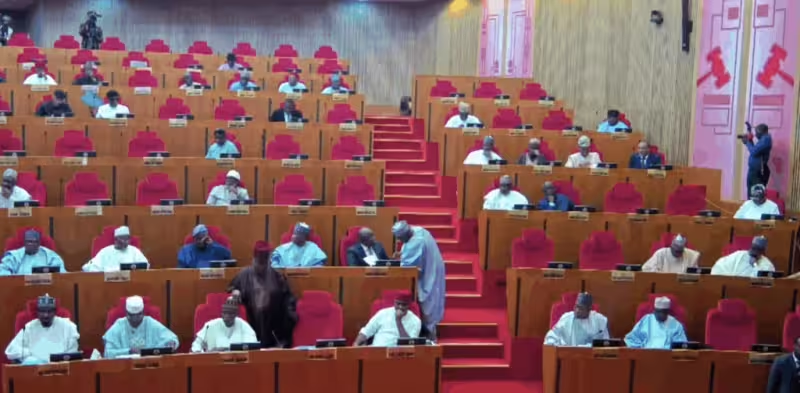
The Senate on Thursday passed an amendment to the Electoral Act, 2026, that would give specific courts clear jurisdiction over pre-election disputes and curb the flood of conflicting rulings that has trailed candidate nomination fights.
The bill, sponsored by Simon Lalong, scaled second and third readings in the chamber and now moves the law closer to a system that lawmakers say would settle disputes before the general election starts. Lalong, who represents Plateau south and chairs the Senate Committee on Electoral Matters, said the proposal is meant to eliminate contradictory judgments, reduce abuse of judicial processes and shorten delays in resolving election cases.
Under the proposed section 29A, all pre-election disputes involving National Assembly, State House of Assembly, governorship and deputy governorship contests would begin at the Federal High Court, with appeals going to the Court of Appeal. Disputes over presidential and vice-presidential elections would start at the Court of Appeal and end at the Supreme Court. The amendment also seeks to define jurisdictional competence in pre-election matters and streamline disputes arising from party primaries.

The move comes after President Bola Tinubu signed the Electoral Act, 2026, into law on February 18. That law focused on the statutory integration of the bimodal voter accreditation system and electronic transmission of results, but senators said judicial ambiguities around pre-election suits still needed urgent clarification. The new amendment would also reinforce timelines for the Independent National Electoral Commission to finalise candidate lists and create greater stability for election planning.
The friction the Senate is trying to remove is not abstract. Forum shopping has allowed litigants to file the same internal party dispute in multiple courts across different states in search of a favourable ruling, often producing contradictory judgments from courts of coordinate jurisdiction. By assigning where cases must start and where they must end, the Senate is trying to settle the legal status of candidates before polling day instead of letting nomination battles spill into the election itself.
Lalong said the amendment is both practical and equitable. He said democracy depends not only on how elections are conducted, but also on the certainty of the legal process that leads into them, and argued that cleaner rules would restore public confidence in the judiciary and strengthen the country’s electoral system.