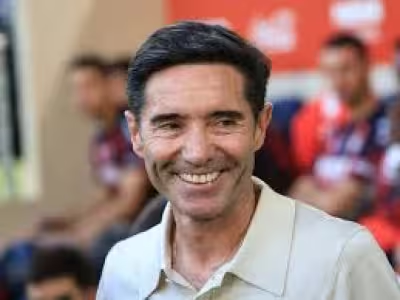




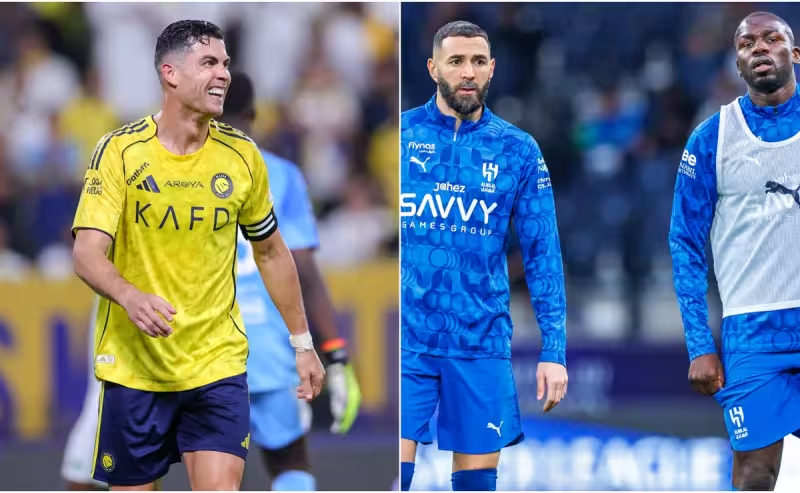
Kalidou Koulibaly will not play again for Al Hilal this season after suffering a thigh injury that has sidelined him since April 8, the club left him out of the squad for Friday’s cup final and Saudi reporting now says he is expected to miss the remainder of the campaign.
Al Hilal did not include their captain in the matchday group for the King of Champions Cup final against Al-Kholood on Friday, a decision that followed reports the injury occurred during training several weeks ago and that Koulibaly has been recovering since early April.
Saudi journalist Ahmed Al-Ajlan has reported that Koulibaly’s lay-off began on April 8 and that the defender is now expected to miss the rest of the season, a development that would remove one of Al Hilal’s defensive constants as the title race heads into its final weeks.
The timing sharpens the stakes: Al Hilal trail Al Nassr by two points as the season approaches its conclusion, and the absence of their captain in the closing fixtures shifts pressure onto the rest of the squad and coaching staff to shore up the back line without him.
Al Hilal have not officially confirmed how long Koulibaly will be sidelined, leaving a gap between the journalist accounts and the club’s public position. That silence complicates planning for a team negotiating both a domestic cup final and a tight league finish.
For Senegal the implications go beyond a domestic title fight. Koulibaly is the national team’s captain, and his availability for the 2026 World Cup has become a growing worry. Senegal were drawn into Group I alongside France, Norway and Iraq for the 2026 World Cup, and losing minutes at club level during the season’s end would be a serious concern for both medical staff and coaches monitoring his rehabilitation.
The practical effect on Al Hilal is immediate. Losing a defensive leader in the run-in alters matchday selection and in-game management: younger or less experienced defenders must be given roles they might not have been earmarked for, and set-piece and organizational responsibilities that Koulibaly normally carries will have to be redistributed.
That redistribution matters because the margin in the title race is thin. Two points separate Al Hilal and Al Nassr, and every fixture in the remaining weeks carries an amplified cost. The absence of Koulibaly also narrows tactical options; without his presence the team may need to adopt different shapes or more conservative strategies against direct rivals.
The unanswered question now is whether Al Hilal’s medical team can compress the recovery timeline without risking a longer-term setback, and whether Senegal can be confident of his fitness for the 2026 World Cup if he misses the rest of the domestic season. With the club yet to confirm the duration of his lay-off, coaches on both sides must prepare contingency plans for the weeks ahead.
For Koulibaly himself, the immediate reality is reconstruction rather than the pitch: recovering from a thigh injury while watching a title chase and a World Cup window narrow. If he does not return before season’s end, his absence will be counted not just in points dropped or a cup final missed, but in the greater uncertainty it creates for a national team that will look to its captain to lead in Group I next summer.