


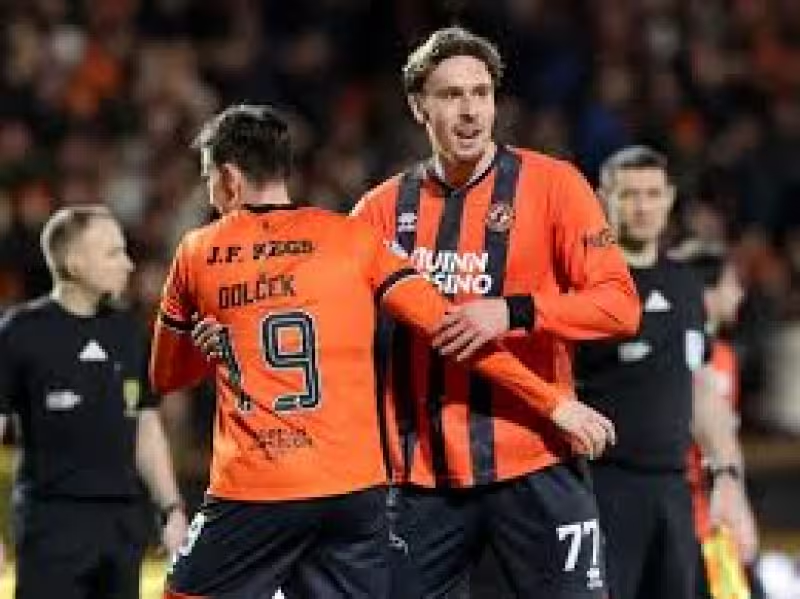
Dundee United welcomed Livingston to Tannadice Park on Tuesday night for a Scottish Premiership matchday 37 fixture, with Johnny Russell replaced in what was reported as potentially his last appearance at the ground.
The match landed with little at stake for league positions: United had already guaranteed safety and began the post‑split weekend sitting top of the relegation group on 43 points, having taken 40 points from 33 pre‑split games — nine wins, 13 draws and 11 defeats that left them sixth points behind sixth‑placed Falkirk.
Those totals frame why the game mattered to both clubs. Livingston arrived already relegated after 36 fixtures in which they won twice, drew 14 and lost 20, and they were bottom of the table, 10 points adrift of 11th‑placed St Mirren. The visitors had managed only one away win in recent times — their solitary post‑split victory came at St Mirren — and had won just one of their last six clashes with this United side.
United’s immediate form was mixed. They opened their post‑split programme with a 3-0 win over Dundee and then suffered back‑to‑back defeats, a run that left the club pursuing a seventh‑place finish rather than a push higher. The hosts had also been dependable against teams that began a matchday bottom: since a 1-1 draw with Hibernian in November 2024 they had recorded five league wins against such opponents.

Availability shaped selection questions before kick‑off. United were without Luca Stephenson, Ashley Maynard‑Brewer, Kristijan Trapanovski and Isaac Pappoe through injury, while Emmanuel Agyei sat out through suspension. For Livingston, Connor McLennan was the only listed injury absence with an ankle issue. Planning for the game included the possibility that Panutche Camara might be used in midfield alongside Vicko Sevelj in Agyei’s absence, and Scott Arfield could have turned to Robbie Muirhead, Stevie May and Cristian Montano after the derby defeat to Dundee.
Small details during the match registered in live reporting: live updates recorded a disallowed header from Montano and noted that Johnny Russell was replaced at Tannadice, while Julius Eskesen was brought on later in the contest. Those moments fed a larger pattern for both clubs — United juggling squad limits as they try to stabilise a season that has shown both resilience and spells of vulnerability, Livingston scraping for wins in a campaign which included only W2 D3 in one sequence.
History and streaks added texture. United had lost only one of their past six final home Premiership games, while Livingston had not won their final away game in any of their past 10 top‑flight seasons — their last such victory came in 2001‑02, a 3-2 win at Hearts. On a managerial ledger, Jim Goodwin had lost just one of his nine managerial home games against Livingston in the Premiership, and Livingston had themselves lost their past two league meetings with United; defeat again would have been a first top‑flight run of three straight losses to United for the club.
The clear takeaway is this: Dundee United enter the closing run with safety secured and a realistic shot at consolidating a mid‑table finish, but selection problems and a brief dip in form mean the club cannot yet claim consistency. Livingston head back to the lower division with a season of sparse wins and heavy draws behind them, leaving questions about how they rebuild — and whether United can turn their occasional setbacks into steady progress as the campaign finishes.