




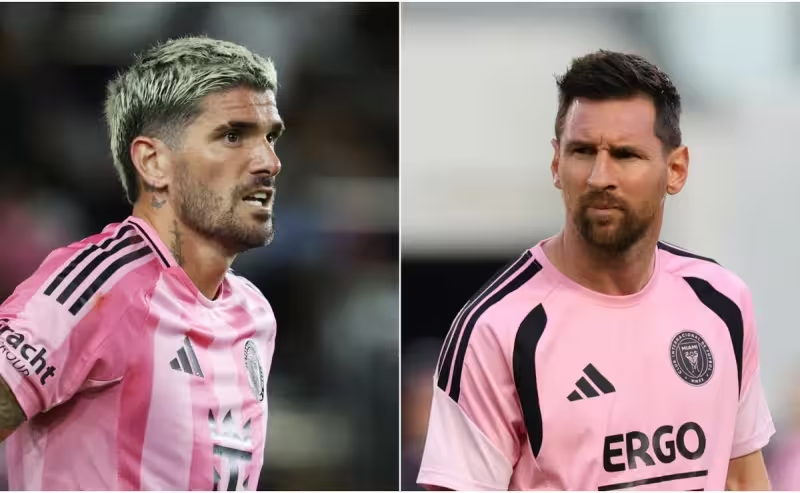
Inter Miami beat FC Cincinnati 5-3 on May 13 at TQL Stadium, and Lionel Messi scored the goal that made it 5-3 with an assist from Mateo Silvetti.
After the game, Rodrigo De Paul’s camp made clear that his plan is tied to Messi’s timetable: De Paul will remain with the club while Messi keeps playing and intends to return to Racing once Messi retires.
The stakes in that simple pledge are concrete. Messi’s Inter Miami contract runs through 2028, and De Paul is signed through the end of 2029 — a deal that pays him an annual salary of more than $9.6 million in Major League Soccer. There is, however, a built‑in escape: De Paul could leave a year early if Messi retires in December 2028, a window the midfielder’s adviser says he expects to use if Messi steps away.
De Paul’s ties to Racing are long and visible in his record: he played 72 matches for Racing Club across two stints from 2012 to 2014 and again in 2016, scoring seven goals and providing nine assists. Last summer he left Atletico Madrid to join Inter Miami, reuniting with teammates from the Argentina national side. Messi himself arrived at Inter Miami in July 2023 after departing Paris Saint‑Germain.



The personal connection between De Paul and Messi — teammates on Argentina’s 2022 World Cup squad and now club teammates — is the context for the decision De Paul’s camp described. Tomas Davila said De Paul’s intent is to stay as long as Messi keeps playing and that he has already decided he will return to Racing when Messi retires.
The arrangement carries friction. De Paul is contracted into 2029, yet his stated plan is to leave when Messi stops, creating a mismatch between paperwork and personal commitment. Messi’s goal on May 13, set up by Silvetti, is a reminder that Messi remains a decisive on‑field presence; any delay of a retirement announcement would, under the plan Davila outlined, keep De Paul in Miami longer despite Racing’s pull and the transfer mechanics that would follow.
There are also practical questions left unaddressed by the declarations: how Inter Miami or De Paul would handle the mechanics of an early exit from a contract that runs until the end of 2029, and whether Racing would press for an immediate return or accept a midseason arrival. The financial reality — De Paul’s salary above $9.6 million — will complicate those logistics, even if the choice is ultimately driven by sentiment rather than money.
What matters now is simple and immediate: Messi is still scoring for Inter Miami, and De Paul has tied his own next move to Messi’s timetable. The single consequential question that follows is the clearest measure of this alliance — will Lionel Messi retire in December 2028?