




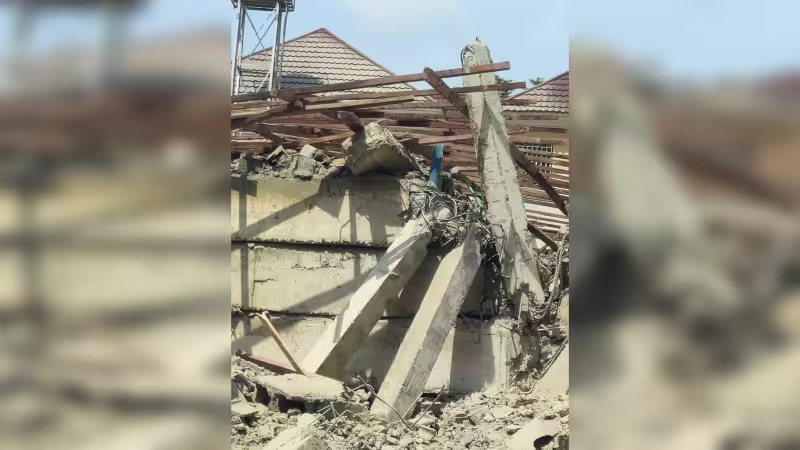
Five people were killed when a three-storey building under construction collapsed behind Gudu Market in Abuja’s Gudu District at about 3:30 a.m. on Saturday. Rescue teams pulled 16 people from the rubble by the time of the report.
The FCT Emergency Management Department said 11 of those rescued were taken to the Federal Medical Centre Abuja, Asokoro District Hospital and Maitama Hospital for treatment. Officials from FEMD, the National Emergency Management Agency, the Federal Fire Service, the FCT Fire Service and the FCT Police Command were at the scene as the search continued through the wreckage, where most of those trapped were labourers working on the building.
The collapse adds another fatal entry to a long list of structural failures in the capital. HURIWA said Abuja had seen repeated cases of collapsed residential and commercial buildings over the years and blamed the latest disaster on systemic corruption, weak regulation and political failure.



Emmanuel Onwubiko, HURIWA’s executive director, said the painful truth was that many buildings collapsing in Abuja were the product of systemic failure long before they physically caved in. He pointed to substandard reinforcement materials, weak concrete mixtures, structural overloading, illegal modifications, poor soil analysis, compromised foundations, non-compliance with approved engineering specifications and the absence of rigorous integrity testing during construction stages.
He said successive FCT administrations had failed to establish a sustainable, transparent and technologically driven compliance mechanism capable of preventing structural disasters. HURIWA said the recurring collapses reflected regulatory negligence, compromised engineering standards, weak enforcement mechanisms, institutional corruption, political patronage and the use of substandard construction materials.
The group recalled that since 2015 Abuja had recorded multiple building collapses in Jabi, Gwarinpa, Kubwa, Lokogoma, Sabon Lugbe, Lifecamp, Guzape and other districts. The disaster behind Gudu Market fits that pattern and leaves the same question hanging over the city’s construction sites: whether the rules meant to prevent the next collapse are being enforced at all.