




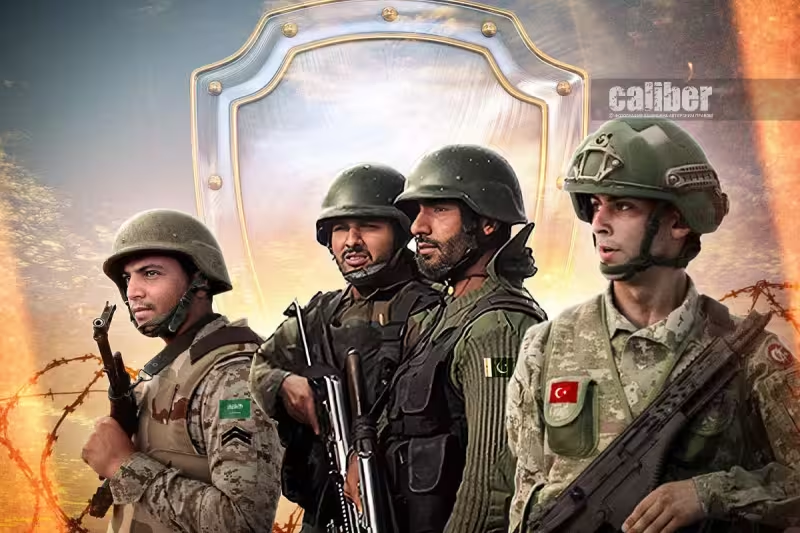
Pakistan strongly condemned the drone attack on the Barakah Nuclear Energy Plant in the United Arab Emirates on 18 May, after a strike on Sunday triggered a fire outside the plant's inner perimeter, the country's foreign office said in a forceful statement.
Islamabad's reaction was blunt and swift. The foreign office said it stood "in full solidarity with the brotherly people and Government of the UAE," called any deliberate targeting of nuclear facilities "a grave violation of international law," and warned that "Nuclear installations must never be targeted under any circumstances. Such reckless actions carry potentially catastrophic and irreversible consequences for human life, the environment, and regional as well as global peace and security," underscoring the urgency of the protest.
The statement came the same day published details of a large Pakistani military deployment to the Gulf: around 8,000 troops, a squadron of fighter jets and an air defence system sent to Saudi Arabia. The reporting said the deployment represents a substantial combat-capable force intended to support Saudi Arabia's military in the event of further attacks on the kingdom and marked a scale of movement that had not previously been disclosed publicly.

That external reporting and Islamabad's condemnation sit against a concise set of facts: no group had claimed responsibility for the Barakah strike at the time of these statements; described the deployment as larger than previously disclosed; and the reporting framed the moves as part of deepening military cooperation between Pakistan and Saudi Arabia. Pakistan and Saudi Arabia have been building closer ties, including a Joint Strategic Defence Agreement signed in 2025, and Islamabad has been trying to position itself as a key mediator in the ongoing Iran conflict.
Pakistan's foreign office did not stop at condemnation. It urged all parties "to exercise restraint and avoid steps that could escalate tensions further in the region," and said "Dialogue and diplomacy, consistent with the principles and purposes of the United Nations Charter, remain the only viable path toward lasting peace, stability, and de-escalation in the region." The line echoed a familiar diplomatic posture even as the armed deployment to Riyadh was disclosed.
The contrast is the story's tension: Islamabad's insistence that nuclear sites must never be targeted sits uneasily next to its recent military moves. Deploying a large, combat-capable force to Saudi Arabia while publicly calling for restraint risks diluting Pakistan's standing as an impartial interlocutor. Khawaja Muhammad Asif captured a related regional dynamic with his remark: "If Qatar and Turkey also join this existing agreement, it will be a welcome development." He did not specify details in the remarks provided, but the comment points to an appetite in parts of the region for broader security arrangements.
The question now is stark and immediate: can Pakistan simultaneously bolster a partner's defenses and credibly claim the neutrality required to mediate between Iran and its Gulf neighbours? Pakistan's moves suggest it is trying to do both—condemning the Barakah strike and urging diplomacy while positioning forces that would act in defence of a regional ally—but those actions are not the same thing. How Islamabad navigates that split will determine whether it becomes a broker able to pull rival sides toward dialogue or a participant whose military posture deepens the divides it says it wants to close. For readers tracking Pakistan's role in the Gulf, earlier Round Time reporting on Islamabad's diplomacy and talks with Tehran is available at and on the diplomatic choreography that affected planned visits at