





Nearly 30%: vanguard Energy ETF rose nearly 30% year to date in 2026 after higher oil prices and a supply shock pushed energy margins higher. That burst of returns has redirected money into Vanguard funds tied to energy, consumer staples and value stocks, changing where portfolio managers find performance this year.
Vanguard Energy: Nearly 30%
About 4%: The Vanguard Mega Cap Value ETF was beating the S&P 500 by about 4% year to date in 2026 as investors rotated away from expensive growth names and toward value-heavy mega caps. Price-to-earnings ratios on tech stocks had shrunk even though earnings growth remained strong, prompting reweighting into cheaper, dividend-rich large caps and boosting the mega-cap value fund's relative returns.


Vanguard Mega Cap Value: About 4%
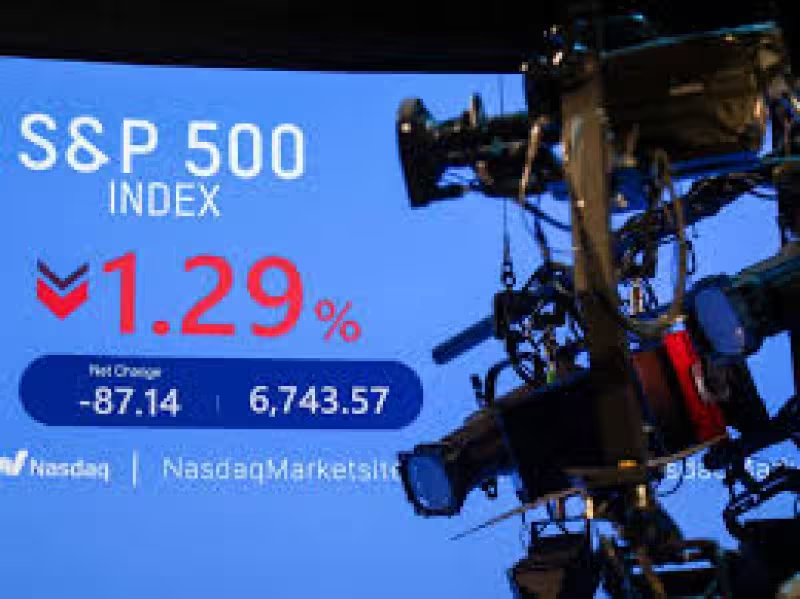
Seven of the 11 S&P sectors: The S&P 500 was up about 3% year to date while seven of the 11 S&P sectors outperformed the index in 2026, underscoring the breadth of the shift. The Vanguard Consumer Staples ETF served investors seeking safety; consumer staples stocks were expected to remain in high demand if the U.S. economy continued to slow, giving the staples fund a defensive tailwind distinct from the energy rally.
Seven of 11 S&P Sectors
Roughly 20%: Iran effectively closing the Strait of Hormuz disrupted roughly 20% of global oil supplies and pushed oil prices higher, increasing margins across the energy stream from producers to refiners. If energy prices stay high into the second half of 2026, the Vanguard Energy ETF could remain a leader, but that dependency on sustained oil-market stress is the key fragility in the current outperformance.
Three Vanguard ETFs: The Vanguard Energy ETF, Vanguard Consumer Staples ETF and Vanguard Mega Cap Value ETF all have tailwinds that could keep them outperforming through the remainder of 2026, according to the performance patterns seen so far. For investors and portfolio managers, the practical step is to quantify exposure: overweighting energy and defensive/value funds has outpaced the broader index this year, while monitoring oil-supply dynamics and macro slowdown signals before locking in larger sector bets.