




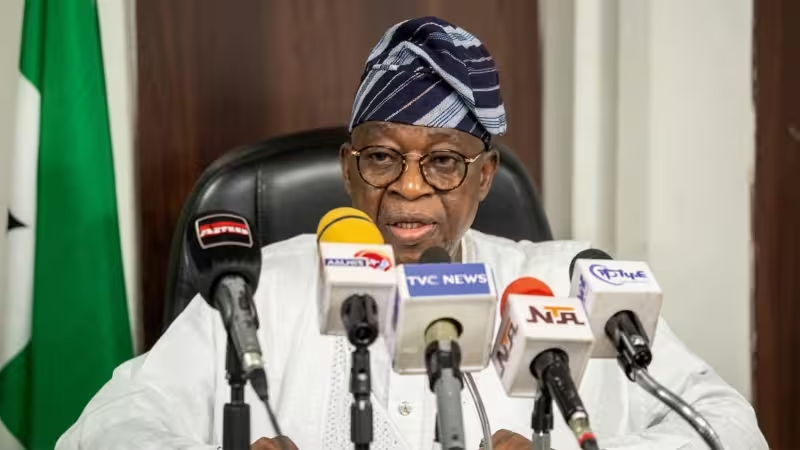
Adegboyega Oyetola opened a meeting of West and Central African port officials in Lagos on Monday by saying Nigeria and its neighbours have already committed more than $27 billion to expand port capacity. The board session of the Port Management Association of West and Central Africa runs from May 18 to 20.
He said the money is going into new deep seaports and major upgrades at existing terminals, including channel deepening, so the region can take larger vessels and move more cargo. Oyetola said the Tinubu administration remains committed to modernising Nigeria’s ports through infrastructure upgrades, digital transformation and better operating efficiency.
The amount is the clearest sign yet of how aggressively governments across West and Central Africa are trying to catch up with rising trade demand. Nigeria hosted the 43rd PMAWCA annual council and managing directors’ roundtable in 2023, and this week’s meeting in Lagos brought together chief executives and senior maritime officials from across the region to press the next phase of that effort.

Oyetola said coordinated policy interventions and stronger inter-agency collaboration had already reduced logistics bottlenecks at major Nigerian seaports. He also said the Deep Blue Project had eliminated piracy in Nigerian waters and sharply reduced maritime crime across the Gulf of Guinea, arguing that the improvements are making port calls faster and more predictable for shippers and investors.
The meeting was hosted by Abubakar Dantsoho, the managing director of the Nigerian Ports Authority and president of PMAWCA. The authority said the three-day session will focus on better port infrastructure, stronger logistics systems, deeper regional cooperation and a larger developmental footprint for host communities, all under the theme, “Ports of the Future: Combining Logistical Resilience with Inclusive Community Development”.
The push for more capacity also reflects a blunt warning from business leaders that the region is still not keeping pace. Aliko Dangote said West and Central Africa are short of ports and that some cargoes can take up to three weeks to discharge in Côte d’Ivoire, adding that entrepreneurs should be encouraged to invest. Oyetola’s case was that the cure is already under way: more ports, deeper channels, better coordination and a system built to handle larger trade volumes without the delays that have long defined the region.
That is the immediate test for the Lagos talks. If the commitments Oyetola described translate into faster construction, deeper channels and tighter port operations, the region’s busiest gateways could start to match the trade they are meant to carry. If they do not, the $27 billion headline will remain a promise floating above the waterline.