




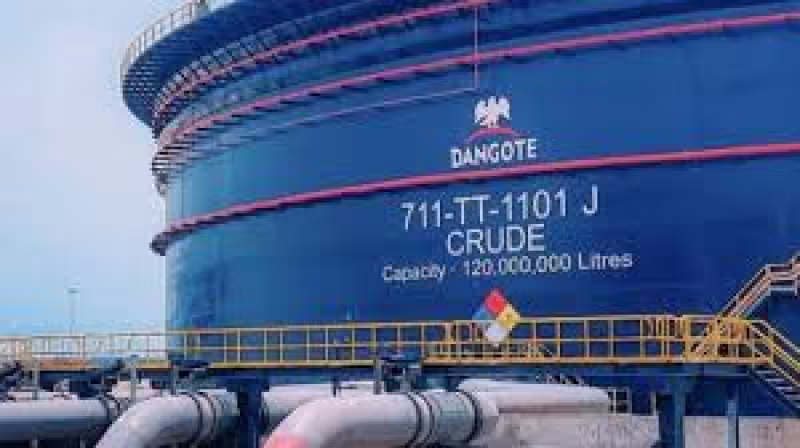
Dangote Petroleum Refinery & Petrochemicals on Tuesday cut the price of aviation fuel (Jet A1) to N1,650 per litre from N1,750 and said it would switch from a dollar‑denominated price to a naira‑based model while offering a 30‑day interest‑free credit facility backed by bank guarantees for marketers and airline operators.
The refinery said the package was designed to ease cost pressures on airlines and ensure an uninterrupted fuel supply across the country — a move that comes after carriers and industry groups had warned that surging Jet A1 prices were putting flight operations at risk.
The numbers explaining why matter: airline representatives told regulators earlier this year that Jet A1 had risen from N900 per litre as of February 28 to as much as N3,300 per litre, and the Airline Operators of Nigeria on April 14 threatened to suspend operations from April 20 unless costs were addressed. A federal technical committee has recommended including aviation fuel in a naira‑for‑crude scheme and set indicative end‑user ranges between N1,760 and N1,988 per litre generally, and between N1,809 and N2,037 per litre in Lagos and Abuja.
Dangote’s N1,650 price sits below those technical committee ranges and undercuts recent market peaks, while the 30‑day interest‑free credit and the move to naira pricing are meant to lower procurement costs, improve operational stability and help moderate airfares, the refinery said. Industry officials expect the change to take immediate pressure off cash flows for carriers that buy fuel on tight margins.
For Dr Allen Onyema, founder of Air Peace, the fuel cut will be welcome relief against a suite of mounting costs. Air Peace recorded no fewer than 10 bird‑strike incidents between January and April this year, and Onyema said the carrier had suffered 115 bird‑strike incidents over the last five years, more than 30 of them in a single year — a maintenance and disruption burden that local papers estimate costs carriers about N20 billion annually.


The operational picture is further complicated by recent safety events at other operators. United Nigeria Airlines reported six bird‑strike incidents in the first five months of 2026 and said one recent strike to an Airbus A320‑200 at the Nnamdi Azikiwe International Airport, Abuja affected the aircraft’s nose immediately after landing and forced it out of service for mandatory safety inspections.
The context is simple and immediate: domestic carriers have been pressing for predictable, affordable Jet A1 to keep planes flying and fares from spiking. The refinery’s announcement — also reported in a daily update titled Dangote Refinery Jet Fuel Prices: Daily Publication Aims to Ease Aviation Costs — plugs directly into that demand by offering lower paperwork‑strained credit terms and a naira price intended to shield buyers from dollar volatility.
The tension is where the story sharpens. Dangote’s retail‑facing figure of N1,650 is below the federal committee’s indicative end‑user bands, raising questions about who will match the price and how long it can be sustained. The technical committee’s recommendation to fold aviation fuel into a naira‑for‑crude scheme has not been fully implemented, and industry stakeholders warned that without coordinated policy and broader supplier adoption the relief could be temporary rather than systemic.
What happens next matters to travellers and balance sheets: if other suppliers follow Dangote’s move and the government backs a stable naira pricing mechanism, airlines could see materially lower procurement costs and fewer cancelations tied to fuel shortages or unaffordable fills. If not, carriers may still struggle under a mix of high fuel swings and steady nonfuel costs — notably the safety and maintenance bills from recurring bird strikes that already shave billions off carrier revenues each year.
The single unanswered question is whether government policy and other fuel suppliers will align behind the refinery’s naira pricing and credit terms — without that alignment, the cut to N1,650 may help today but leave the industry exposed to the same shocks that drove operators to threaten suspension in April.