




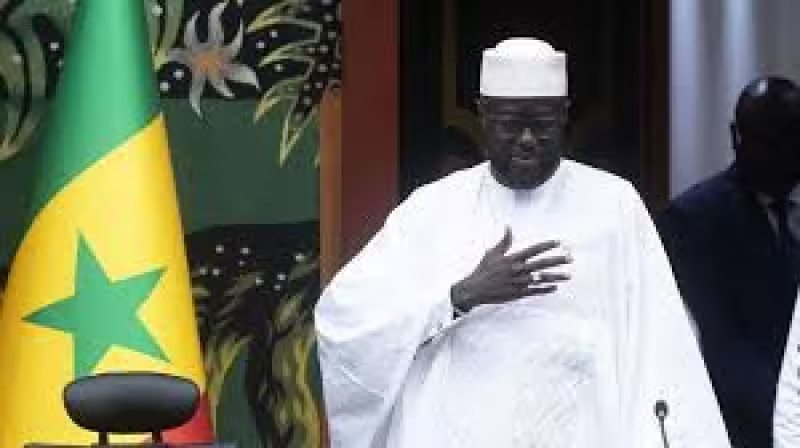
El Malick Ndiaye has resigned from the presidency of Senegal’s National Assembly, saying he made the decision after a profound reflection and in the higher interest of the nation. In a message to the nation, he said he had matured the choice “dans le silence, la responsabilité et le discernement,” guided by “le sens de l’État.”
The resignation lands 48 hours after President Bassirou Diomaye Faye dismissed Prime Minister Ousmane Sonko, turning a political rupture at the top of government into a shock at the summit of the Senegalese state. Ndiaye did not spell out the exact reasons for his departure, leaving the announcement to stand on its own as a sudden and consequential break.


What he did say was limited but deliberate. Ndiaye framed the move as one taken “après une profonde réflexion,” and tied it to “l’intérêt supérieur de la Nation,” language that suggests a decision meant to project restraint rather than explanation. That absence of detail is now part of the story: one of the country’s top institutional figures has stepped aside without saying what forced the choice or whether the upheaval in government played any direct role.
The timing is what gives the resignation its force. Faye’s dismissal of Sonko had already unsettled the political balance, and Ndiaye’s departure deepens the sense that the crisis has moved beyond a single office and into the core institutions of state. For now, the only certainty is that the presidency of the National Assembly is vacant after a resignation offered in silence, and the reasons behind it remain undisclosed.