




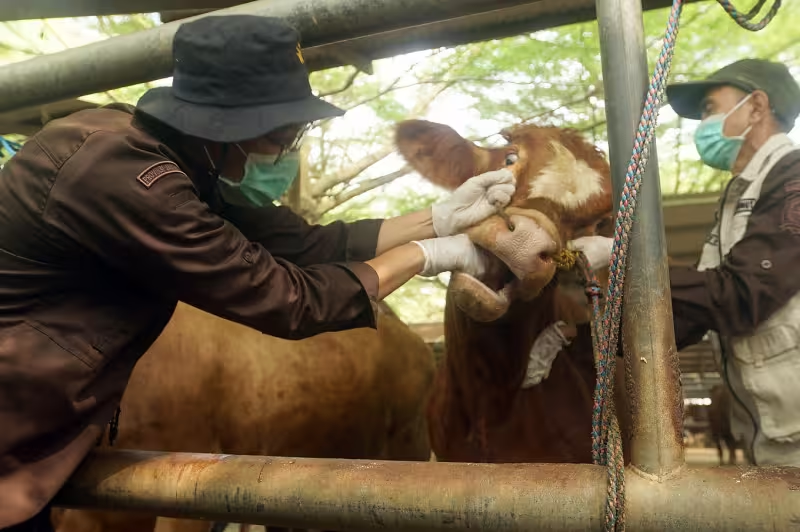
Maisisco walked past rows of tethered goats and inspected the animals’ mouths and legs as veterinary teams fanned out across Pekanbaru on Wednesday, part of an intensified push to police the trade in sacrificial livestock before Idul Adha next week.
The Agriculture Ministry projects around 2.3 million animals will be slaughtered nationwide for the holiday expected on May 27, and local authorities have stationed vets and monitoring teams at farms, temporary markets and trading points to keep animal-borne disease from spreading. Pekanbaru’s Agriculture and Fisheries Agency has deployed veterinary officers citywide and so far has inspected 3,754 sacrificial animals with no signs of disease among those examined.
"The team conducts thorough examinations of the animals’ physical condition, including body shape and size, legs, eyes, nose, mouth and teeth, as well as their appetite," Maisisco said, describing the checks. "The goal is to ensure the animals are free from zoonotic diseases that could potentially spread from animals to humans, while also ensuring they are healthy, free from physical defects and meet the requirements for sacrificial animals under Islamic law," he added.
The move comes as health officials in Riau step up surveillance after an outbreak of foot-and-mouth disease (FMD) earlier this month. As of mid-May 2026, provincial data showed 758 livestock animals in Riau had contracted FMD and 532 of those animals had recovered following intensive treatment and monitoring efforts, figures that officials cite as the reason for tightened controls ahead of Eid Al Adha 2026.
"Besides ensuring that residents can carry out the Idul Adha ritual safely and comfortably, the monitoring is also intended to curb the spread of foot-and-mouth disease (FMD), which remains a threat to livestock farmers in Riau," Riau Livestock and Animal Health Agency head Mimi Yuliani Nazir said, underlining why inspectors are still working through the weekend. "Officers are continuing to treat and monitor infected livestock so they can recover as quickly as possible," she added.
Pekalongan, a city that already runs routine pre-holiday checks, has also mobilized mixed teams of veterinarians, medical personnel and veterinary paramedics to inspect trading points where sacrificial animals are being sold. Lili, a local official, said Pekalongan’s supply is still insufficient and that many sacrificial animals are brought in from other regions, a fact that has sharpened local scrutiny.
"We routinely conduct inspections of sacrificial animals ahead of Idul Adha. Pekalongan’s livestock supply is still insufficient, so many sacrificial animals are brought in from other regions," Lili said on Monday. "That is why our teams are conducting direct inspections at animal trading sites to ensure that livestock entering the city are healthy and free from disease," she added.
The pattern is familiar: inspectors clearing animals at origin points can reduce the chance that infected stock moves between provinces, but the sheer scale of trade ahead of the holiday — roughly 2.3 million animals nationally — makes the work urgent and imperfect. Pekanbaru officials say their checks will continue throughout the Idul Adha slaughtering period, but the flow of animals into supply-short cities like Pekalongan creates a potential weak link in the chain.
Authorities are banking that visible inspections, quarantines where needed and continued treatment of infected herds in places like Riau will blunt the risk. If those measures are maintained through the slaughtering period, public health and religious rites are likely to proceed without major disruption; if not, the interregional movement of animals could allow a fresh wave of infections to re-emerge during Eid Al Adha 2026.