


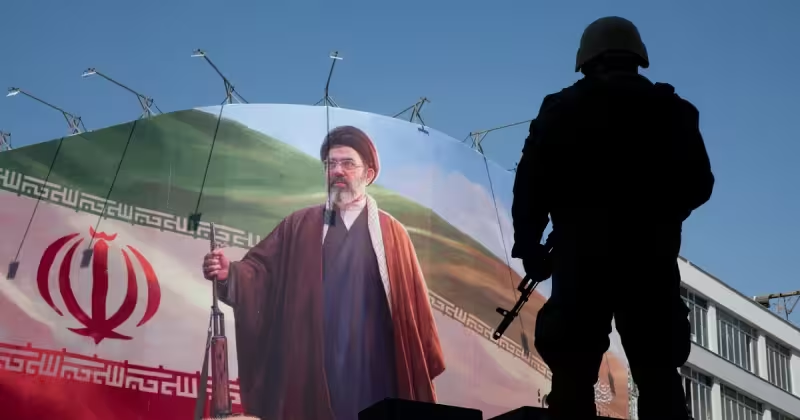
Pete Hegseth said the supreme leader of iran, Ayatollah Mojtaba Khamenei, is believed to be alive.
Hegseth added that Khamenei is wounded and disfigured, and has not been seen publicly since the Feb. 28 strikes. Those statements come from Hegseth in repeated public remarks and from his March 13 Pentagon briefing, claimed by Pete Hegseth.
Pentagon Briefing on March 13
Pete Hegseth, speaking as Secretary of War at a Pentagon press briefing on March 13, said: "Iran’s leadership is in no better shape. Desperate and hiding, they’ve gone underground, cowering." Hegseth claimed that the new supreme leader has been physically harmed and politically weakened: "We know the new so-called not-so-supreme leader is wounded and likely disfigured," Hegseth said, claimed by Pete Hegseth. When asked directly about the supreme leader, Hegseth said, "As far as the status of the individual you mentioned, I believe it's the same," and added, "Not a lot coming from him right now — understandably so. A lot of fear. Believed to be alive, wounded and disfigured. The status remains the same." These are claims by Pete Hegseth about Ayatollah Mojtaba Khamenei's condition.

Feb. 28 U.S.-Israeli Strikes
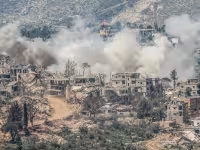
The source says the initial U.S.-Israeli strikes on Feb. 28 sparked the war with Iran and that those strikes injured Mojtaba Khamenei, claimed by the source. The source also says the strikes killed the elder Khamenei and allegedly killed the new supreme leader's wife and several other family members, a claim attributed to the source. Since Feb. 28, Mojtaba Khamenei has not been seen in public, claimed by the source. Hegseth links those Feb. 28 strikes directly to the physical and communicative condition he describes for Mojtaba Khamenei, claimed by Pete Hegseth.
Mojtaba Khamenei's Public Absence Since Feb. 28
Ayatollah Mojtaba Khamenei is the named individual at the center of these statements: Hegseth described him as alive but "wounded and disfigured," claimed by Pete Hegseth. Hegseth said the new leader's recent statement was written and lacked voice or video, claimed by Pete Hegseth, a detail Hegseth used to question the new leader's ability to communicate and to assert a loss of legitimacy: "He's scared, he's injured, he's on the run, and he lacks legitimacy," Hegseth said, claimed by Pete Hegseth. That characterization creates a factual tension between the repeated public claims about Khamenei's physical state and the absence of verifiable public appearances.
The practical consequence for observers and diplomats articulated in Hegseth's remarks is procedural: a written statement without voice or video limits external verification and shapes how foreign governments and militaries interpret leadership signals from Tehran, a line of analysis drawn from Hegseth's emphasis on the lack of public appearances, claimed by Pete Hegseth. For citizens tracking authority inside Iran, the most immediate change is the persistence of uncertainty about who is speaking for Iran and how Tehran will communicate orders in wartime, an effect Hegseth highlighted during the March 13 briefing, claimed by Pete Hegseth.
Will Iran publish verifiable audio or video of Ayatollah Mojtaba Khamenei to settle competing claims about his condition and restore a clear line of authority? That is the urgent open question left by Pete Hegseth's statements and by the absence of a public appearance since Feb. 28.