


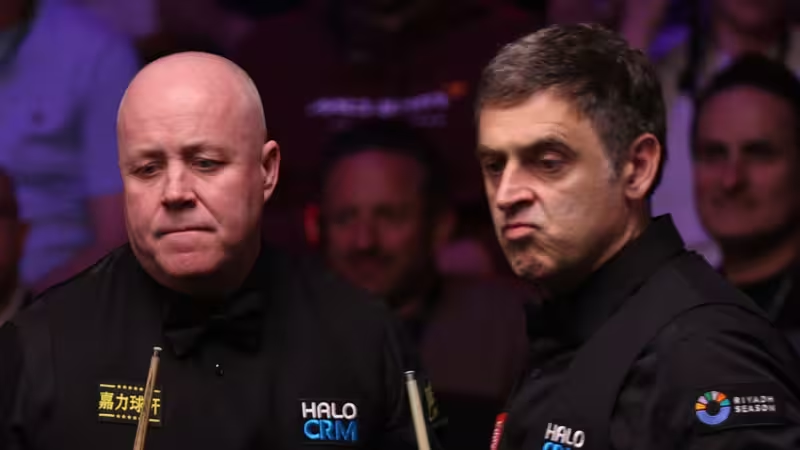
John Higgins beat Ronnie O'Sullivan 13-12 in a final-frame decider at the Crucible, recovering from 8-3 and 9-4 down to complete a dramatic comeback.
Higgins trailed by five frames on Sunday and by five again at 9-4, but he won the last three frames of the day and then the first three on Monday to pull level. O'Sullivan briefly fought back, winning frames 20 and 21 to lead 11-10, and he further forced a deciding frame with a break of 81. Higgins then produced a break of 49 to clinch the match 13-12 and move into the World Championship quarter-finals.
The scale of the turnaround is stark in the numbers: 13-12 final score; down 8-3 and 9-4; last-three-frames-of-Sunday, first-three-frames-of-Monday swing; an 81 break to force a decider and a 49 in the final frame to seal it. It also ended a rare losing run for O'Sullivan at the Crucible — he lost six successive frames there for only the fifth time in his career.
Higgins's victory sends him into the last eight, where he will meet either Neil Robertson or Chris Wakelin. Robertson moved ahead 10-6 in that match on Monday, leaving Higgins to wait on which opponent he will face next.
Context matters here. Higgins and O'Sullivan are two members of snooker's 'Class of '92' alongside Mark Williams, a trio that between them holds 14 world titles. Higgins himself is a four-time champion, having won the world title in 1998, 2007, 2009 and 2011. O'Sullivan had been seeking an eighth world title to set a new outright modern-era record; with this defeat, that run ends at the Crucible for this tournament.
The match contained persistent tension between the two lines of play: O'Sullivan's bursts of dominant scoring and Higgins's steady, frame-by-frame recuperation. The frame-by-frame swings — a cluster of six won by Higgins around the overnight pause, then O'Sullivan's response to regain the edge late — left little margin for error. Higgins's 49 in the decider was not a century or a spectacular clearance, but it was precisely the finish the moment required.
There was room for unexpected commentary, too. Mark Selby, who has watched careers rise and fall at the Crucible, observed plainly: "Oh, he's great. He's great for our game," and added that he is a "world champion in the making." Those words underline how a single match can recalibrate expectations in a tournament where history and present form collide.
The immediate consequence is simple and concrete: Higgins advances to the quarter-finals and O'Sullivan's bid for an eighth world title is over. For fans checking flash scores and watching frame by frame, the match will be remembered for the stretch that turned a near-certain defeat into a final-frame victory and for a reminder that at the Crucible, reputation can be matched — and sometimes overturned — by stubborn, timely play.


