





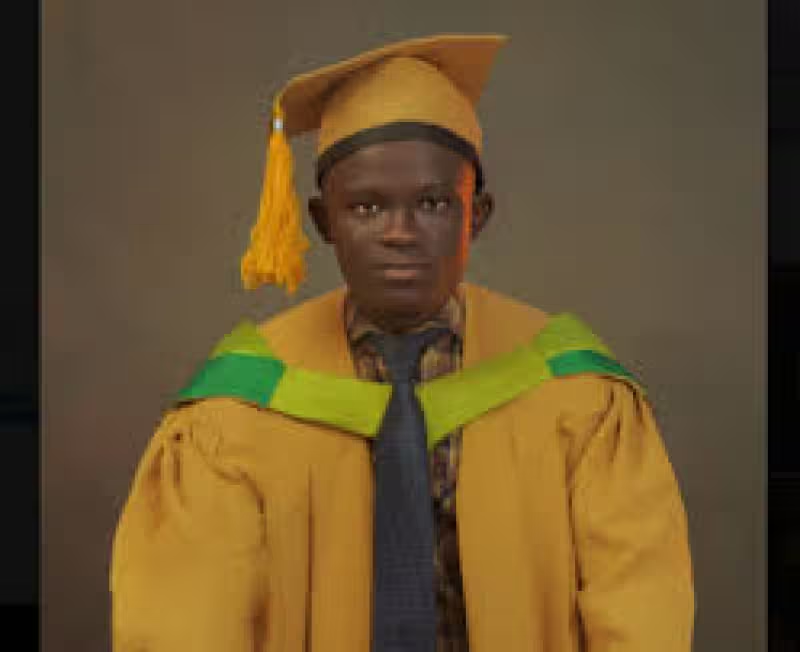
Oladepo Caleb Olugbenga, the overall best graduating engineering student at Ladoke Akintola University of Technology, says NELFUND loans made it possible for him to finish at the top of his class. The university formally named him the best graduating student for the 2024/2025 session in Electronic and Electrical Engineering on January 14, after he posted that the support helped him earn a 4.89 CGPA out of 5.0.
“I’m honoured to let you know that I am the Best Graduating Student of LAUTECH. Your loans made it possible,” Olugbenga wrote on X on Thursday, prompting a reply from NELFUND that congratulated him and said it was proud to have played a part in his journey. He is now being held up as one of the most visible examples of what the student loan scheme can mean for someone who needed it to stay in school.
Olugbenga’s rise carries weight because of where he says he started. In a follow-up post on Friday, April 24, he said he hailed from a village in Osun State and was raised in a modest family of five. He said he grew up without electricity for nine years, relied on lanterns and candles, and attended public primary and secondary schools because private schools were out of reach. He also said he walked miles to school each morning while his parents worked multiple jobs.


He said a scholarship helped him move forward and, with it, he earned a first-class degree. He later said a coursemate’s father gave him his first smartphone in his third year, and that he is still using it. He also said lecturers occasionally provided him with clothing. Those details made his NELFUND post land far beyond a routine graduation announcement, turning it into a wider argument over what the loan programme is doing for students who start with almost nothing.
That reaction has not been uniformly celebratory. Public response to his praise for NELFUND included support, criticism and calls for his loan to be waived, while P.M. News reported that President Bola Ahmed Tinubu was impressed after seeing the testimony and decided to confer a national honour on him. The larger point, though, is already clear from Olugbenga’s own account: the loan was not a side note in his story, but part of what kept him on the path to becoming LAUTECH’s top engineering graduate among 137 first-class students at the university’s 18th Convocation.
For NELFUND, that makes Olugbenga’s case unusually valuable. For him, the answer is simpler still: the programme did what he said it was meant to do, and it helped turn a boy from a village without electricity into the best graduating student in his faculty.