



Charlize Theron’s new movie Apex was taken into the Australian wilderness so its survival story could be filmed where the environment itself could push the actors and the camera. Director Baltasar Kormákur insisted on pairing real locations with set work, and the decision shaped everything from kayaking sequences to the film’s tense final climb.
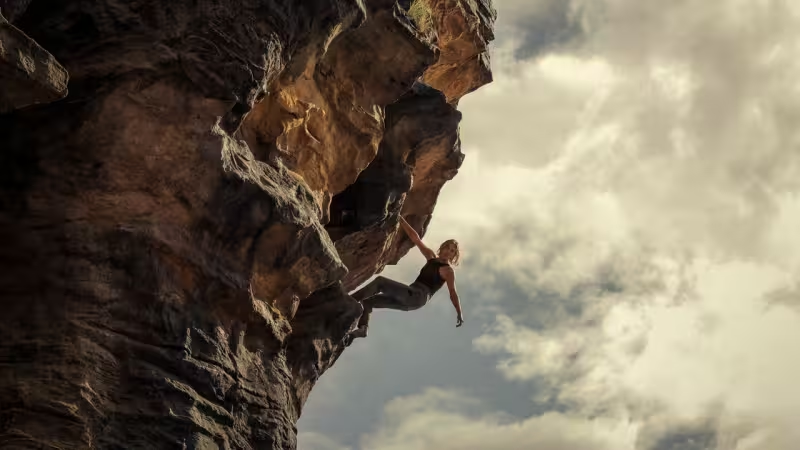
Many scenes were shot in real places around the Blue Mountains, in Canberra and in Engadine, while some climbing and kayaking were recreated on sets. The final climb was filmed at Glenbrook Gorge and on a stage, and Theron did a lot of the physical work herself, including that tense sequence. Kormákur said plainly: "I tend to use nature first before we go on to any set."
Those production choices came from a practical need. The filmmakers realized before shooting that the movie had to be made in the southern hemisphere because there was a lot of water work. The story itself centers on Sasha, Theron’s character, a rock climber coping with the loss of her partner — a role played by Eric Bana — who travels to Australia to explore by kayak and is drawn into a deadly cat-and-mouse game with a local played by Taron Egerton.
Kormákur framed the choice to shoot outside studios as creative pressure, not inconvenience. "I love that part of filming in nature is that you can only control so much," he said, and he argued the limits of control improve the film: "The fight with nature also starts to make it more interesting, rather than fully controlling everything." He added that giving actors the real conditions helps performance: "Because then the actor comes informed about what the real challenges are and they can replicate that."
There was also a practical and human tension on set. The film was written, Theron says, for a colder place: "It was written for a colder place." Kormákur recalled one of the first things she told him: "I'm not a big fan of cold water." Still, Theron committed to the physical demands. She said the immersion paid off: "It's incredible. It's such a gift," and that "this movie relied on really immersing yourself into this environment," a process that she believes revealed Sasha: "You can only [get to know the] character in those circumstances."
The result is deliberate: combine striking, often remote Australian locations with carefully staged scenes when safety and effects required it. The film’s water work and climbing sequences show both approaches — real gorge climbs and constructed stages — working together. That balance answers the central production question plainly: Kormákur and Theron chose the wild because the action and the performances needed unpredictable, physical surroundings, and using nature first made the movie’s survival story feel lived-in rather than engineered.