



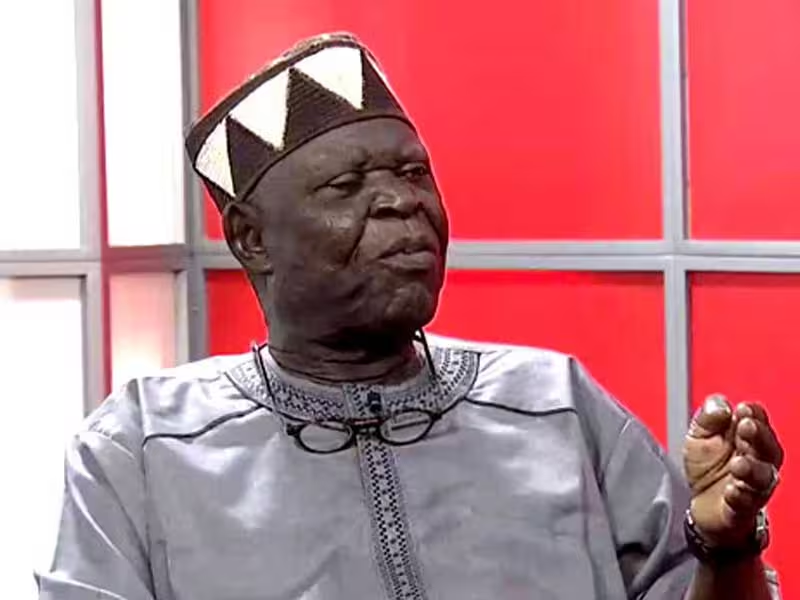
Ayo Opadokun warned on Tuesday that Nigeria’s continued unity and stability could be endangered unless the country undertakes far-reaching constitutional and governance reforms. Speaking in Lagos at a national conference themed “Building a Fractured Nation: The Imperatives of Ethnic Harmony Towards Democracy and Sustainable Development,” he said the country is being pulled apart by deep ethnic, religious and regional divisions.
The conference was organised by the Nigerian Human Rights Community, and Opadokun used the platform to argue that Nigerians are gradually losing faith in one another as mistrust and inequality widen. He said the country’s diversity, which should have been a source of strength and shared prosperity, has instead become a fault line because of poor governance and structural imbalances.
He pointed to the Second Republic as a period when inclusive governance and a stronger sense of national purpose were still visible. According to him, political actors then made deliberate efforts to accommodate Nigeria’s diversity, and public service was guided by collective national interest rather than private advantage. He said that as a former Assistant Director of Organisation of the Unity Party of Nigeria, he saw firsthand that merit and party responsibility, not personal wealth, determined political opportunities, while campaigns were funded by parties rather than individuals.
Opadokun said the later military interventions disrupted Nigeria’s democratic development, concentrating power at the centre and creating inequities that still shape the country today. He said those shifts weakened accountability, encouraged sectional dominance and planted the seeds of distrust and fragmentation, with the effects now visible in recurring ethnic tensions, political polarisation and declining trust in state institutions.
The warning lands against a familiar backdrop, but his argument was not simply that Nigeria is divided; it was that the divisions have been deepened by design and sustained by structure. By linking today’s mistrust to the concentration of power in earlier eras, Opadokun framed reform not as an abstract wish but as the condition for keeping the country together. His answer to the question he raised was plain: without serious changes to how Nigeria is governed, the pressures he described will keep growing.