




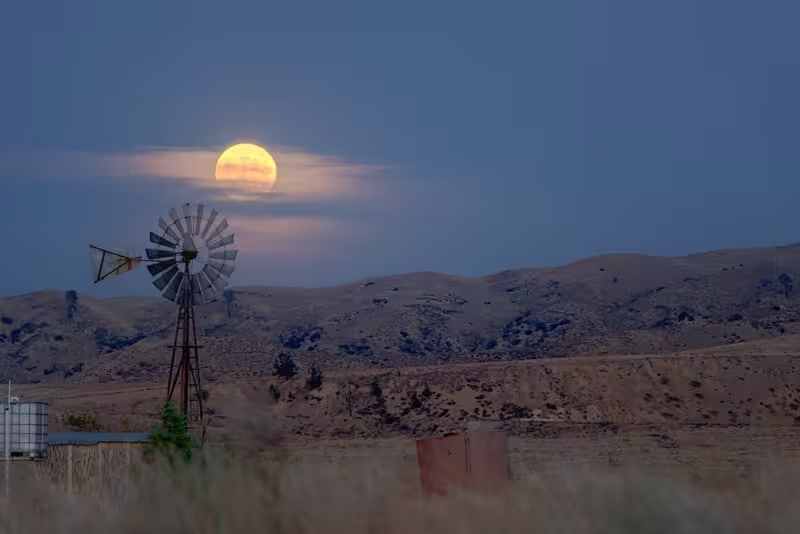
The full Flower Moon that rose on May 1, 2026, was listed as a micromoon, and the month ends with another full Moon on May 31 that NASA says is a Blue Moon. That makes May a rare double feature in the sky, with both full moons coming when the Moon is near its farthest point from Earth.
Fred Espenak’s AstroPixels website listed the May 1 Flower Moon as a micromoon, and timeanddate.com said the next micromoon in 2026 was the Blue Moon on May 30-31. AstroPixels also counted that late-May Moon as a micromoon, while both sources agreed the full Strawberry Moon on June 29 will be one too. EarthSky said 2026 may have either two or three full micromoons, depending on which source is used.
The timing matters because the Moon is not shrinking or changing in any dramatic way. A micromoon is simply a full or new Moon that happens when the Moon is roughly at apogee, its farthest monthly point from Earth. The opposite point is perigee, and the difference is visible to stargazers as a Moon that looks a bit smaller than average. The full Moon at the end of May is described as the year’s most distant full Moon, at 252,360 miles, or 406,135 kilometers away, compared with the Moon’s average distance of 238,900 miles, or 384,472 kilometers.
NASA says the month is not only about the full Moons. Its skywatching notes put the Eta Aquarid meteor shower peak around May 5-6, but warned that bright moonlight may wash out some of the fainter meteors. NASA also said the Moon meets Venus just after sunset on May 18, and that May 31 brings the second Full Moon in a single calendar month. The agency said that is what makes a Blue Moon.
There is a small catch in the labeling that keeps astronomers from being too rigid about it. EarthSky noted that there is no strict definition of how close to apogee the Moon has to be for the micromoon label, which is why one source can count 2026 as having two full micromoons while another counts three. That is also why the late-May Moon can be described as both the year’s most distant full Moon and a Blue Moon, without the two terms meaning the same thing.
For skywatchers, the answer to the question is simple: yes, May 2026 delivers a full Moon Flower Moon that fits the micromoon label, and it is followed weeks later by another full Moon that also does. The clearest night-sky takeaway is not the name, but the pattern — a dimmer-looking full Moon on May 1, a Blue Moon on May 31, and a second micromoon again on June 29.