




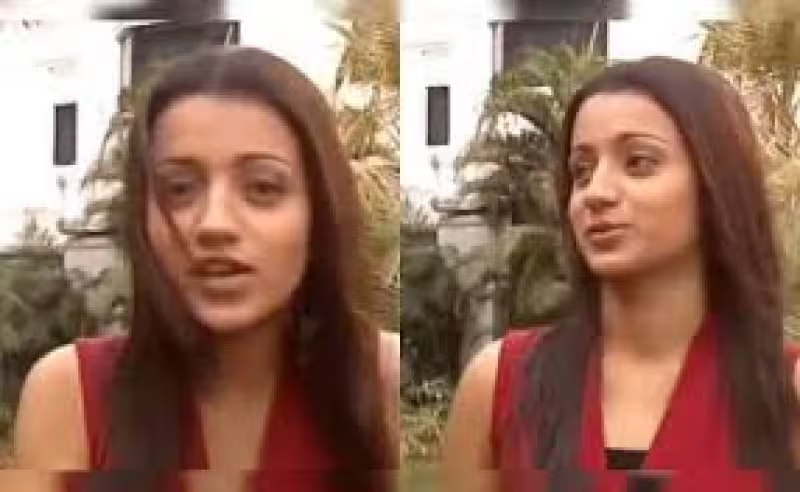
The Times of India published a Tamil Movie News headline today saying Thalapathy Vijay hailed Trisha Krishnan as "our princess Kundavai" and that she, in turn, revealed the one thing she "hates" about him.
The item is credited to the paper's Entertainment Desk and appears under the outlet's Tamil Movie News section. The headline itself names the two stars and pairs a compliment from Vijay with a teasing aside from Trisha; those elements are taken directly from the headline the paper ran.
What is missing, and what matters, is the article text. The only content available with the headline here is a generic newsroom description provided by The Times of India. That boilerplate does not include the substance of the exchange the headline promises — no quote, no context, no timing and no detail on whether the remark occurred at an event, in an interview or on social media.
The contrast is sharp. A headline makes a concrete claim: a prominent actor praised a colleague in a particular way, and that colleague responded with a specific complaint. Headlines shape attention. They push readers toward a story they expect will explain who said what, why it mattered and when it happened. In this case, the body that would confirm or explain the headline is not present in the available text.


That gap matters for two reasons. First, the names involved are high-profile in Tamil cinema: Vijay is one of the industry's most widely followed stars, and Trisha Krishnan has a long public career that draws fan interest. Second, the phrasing in the headline — an honorific like "our princess Kundavai" paired with a teasing admission that she "hates" something about him — invites curiosity and prompts readers to search for the specifics, especially at moments when birthday wishes, tributes or fan posts make such exchanges more visible.
The tension here is procedural and immediate: a published headline that promises particulars and an accessible article that does not deliver them. That mismatch raises the routine but essential questions of verification and sourcing. Did Vijay actually use that phrase? Did Trisha say she "hates" something about him, and if so, what was the context? None of those questions can be answered from the text available alongside the headline.
For readers, the effect is practical. Someone seeing the headline will naturally want to know the detail — what Trisha allegedly "hates" about Vijay — and may assume the paper will provide it. But with only a boilerplate description present, the claim remains unsubstantiated in the information provided here.
Answering the headline's central question is simple and, in this case, final: the available Times of India item does not supply the detail of what Trisha "hates" about Vijay. Until the paper publishes the full copy, or supplies the quotes and context the headline promises, the substance behind the line remains unknown. Readers seeking birthday wishes, celebratory notes or a fuller account of the exchange will have to wait for that follow-up or for another verifiable source to report the exchange in full.