




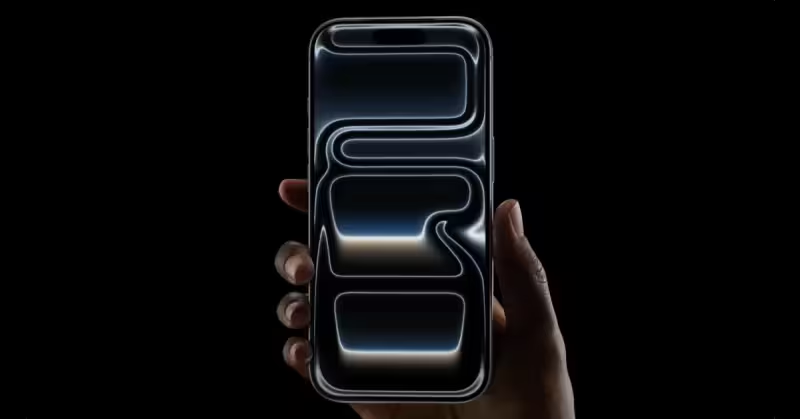
Jeff Pu, in a research note seen by 9to5Mac, predicted that Apple will use an "aggressive pricing strategy" for the base models of the iPhone 18 Pro and iPhone 18 Pro Max, putting their expected starting prices at $1,099 for iPhone 18 Pro and $1,199 for iPhone 18 Pro Max.
Pu’s note also says the two Pro models will be unveiled alongside a new iPhone Ultra this fall, and flags the company could raise prices on higher storage tiers even if it holds down entry-level costs.
The numbers matter because they set the price floor for the premium end of the market just as device makers and buyers are wrestling with a memory-cost squeeze. Ming‑Chi Kuo had earlier said Apple wants to keep its entry models the same price as last year; Pu’s assessment presents a sharper, explicit bet that Apple will press pricing on those base Pro models now.
Pu used the phrase "aggressive pricing" and later described Apple’s approach as an "aggressive pricing strategy," language that signals a deliberate move on base prices rather than incidental fluctuation.
The immediate context is a memory-cost cycle that has already pushed up prices across many Android phones. Rising memory costs, driven in part by surging AI demand and constrained supply, have forced some Android manufacturers to increase list prices. Analysts have warned the Android market could shrink overall this year as budgets tighten and some lower-cost models are shelved.



That pressure is the practical problem Apple faces. Holding entry prices steady or cutting them slightly would help Apple keep sales momentum and blunt a broader market slowdown. But memory and component inflation still give manufacturers a reason to shift costs: one obvious lever is to keep base configurations affordable while lifting prices on higher-capacity storage tiers.
That split — cheaper base models, pricier top-tier SKUs — is already part of Pu’s scenario. He suggested Apple could lock in competitive starting points for the Pro models while using higher storage tiers to protect margins. The strategy would echo moves seen across the smartphone industry this cycle, where manufacturers have absorbed or redistributed costs rather than passing them evenly across every configuration.
The public tension is simple and immediate. Ming‑Chi Kuo’s prior comment that Apple wants to keep entry prices unchanged sits uneasily next to Pu’s forecast of an "aggressive pricing strategy." If Apple holds base prices at roughly last year’s levels, as Kuo expects, the company would still have room to push up top-tier prices — exactly the outcome Pu allows for. If Apple instead follows Pu’s full prediction and cuts or undercuts base Pro pricing, the company would be signaling a more active market-play meant to seize share or blunt competitors that have already raised prices.
Buyers and beat reporters will watch more than sticker prices. Coverage this fall is likely to cover hardware questions and comparisons — and queries about apple iphone 18 pro max battery life and capacity will be part of the conversation even if they are distinct from pricing mechanics.
The single consequential question left by Pu’s note is not whether Apple will release the new phones this fall — that is expected — but how the company will balance entry-level pricing against higher-tier increases: will Apple hold base prices near $1,099 and $1,199 while shifting the burden to storage upgrades, or will it use aggressive base pricing to reshape competition across the premium market?