



Keir Starmer is fighting to stay on as prime minister after four members of his government resigned and more than 80 Labour MPs called on him to quit immediately or set out a timetable for leaving. The pressure on him intensified again on Monday, with two more Labour MPs publicly urging him to go.
The latest revolt came after Labour suffered a disastrous set of elections last week, turning what had been a bruising political setback into a full-blown crisis for Starmer’s leadership. Home Office minister Jess Phillips was among the ministers who resigned, and the resignations have sharpened the sense inside the party that the leadership is running out of room to contain the damage.
Jen Craft said people were frustrated by the pace of change and argued that the party needed a new direction. “It is time for a change in leadership – for someone to set out a clear, strategic vision and direction for our party and for the country. I urge the Prime Minister to step aside to enable this to happen,” she said. Graeme Downie also said the local election results sent a “clear message” and added that “for the good of the country the Prime Minister should now step down.”


Starmer has not only lost the confidence of a growing block of his own MPs; he is now facing a question that goes beyond the immediate revolt. The pressure is rooted in the election losses and the poor local results, but it is also feeding a wider debate about whether Labour can keep governing with authority while its own ranks openly challenge the leader.
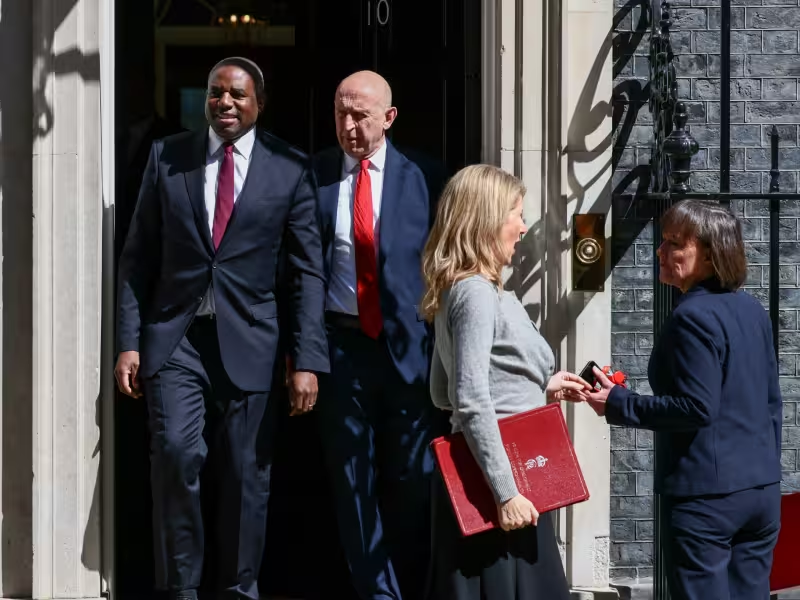
Speaking to reporters outside 10 Downing Street, David Lammy rejected the criticism and said Starmer had his full support. He dismissed the calls as “navel-gazing” and said: “He has my full support, and what I say to colleagues is, ‘Look, let’s just step back. Take a breath’.” Lammy also said “nobody has come forward to put themselves forward in the processes that exist in the party.”
The split has left Starmer exposed to questions about whether the rebellion can spread further. said possible contenders for the top job include Andy Burnham, Angela Rayner and Wes Streeting, while Al Jazeera reported that Starmer was elected just under two years ago with a mandate from the British people for five years. Warren Stephens said the turnover of British prime ministers was already a problem for Washington, where the country has seen five prime ministers in just four years. Colm Murphy described Starmer as “fatally wounded” and said: “It is difficult to see the path by which he can stagger to safety in the long run.” That is now the central question for Labour: whether the prime minister can steady the party, or whether the revolt has already moved beyond repair.