



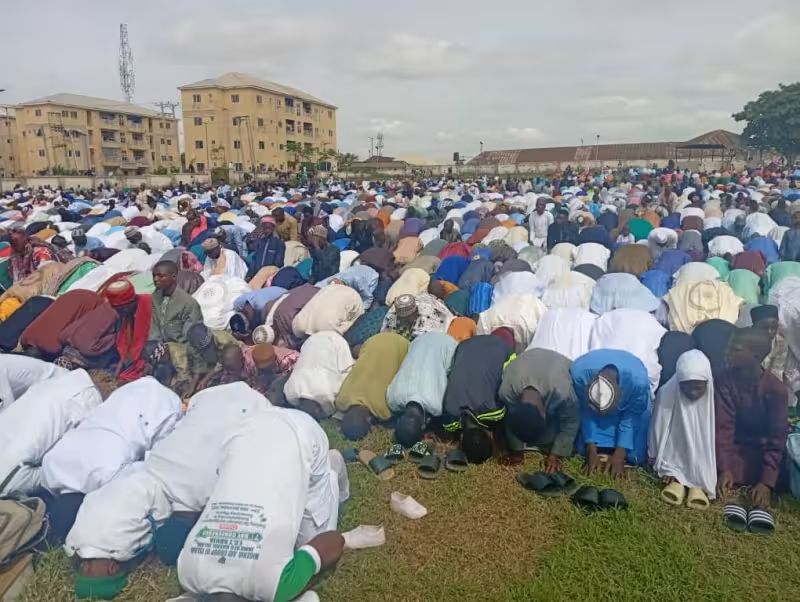
Muslims across Nigeria joined millions around the world on May 27, 2026, for Eid-el-Kabir, gathering at Eid grounds and mosques to perform Eid prayers and mark the Festival of Sacrifice.
From early morning, worshippers trooped into open fields and mosque courtyards for the eid prayers that traditionally begin the holiday, observing the date that corresponds to the 10th Dhul Hijjah 1447 AH in the Islamic calendar. The scale of attendance underscored the festival’s place as one of the high points of the Muslim calendar, with congregational rites followed by communal acts of devotion.
The day’s rituals followed the story at the heart of the festival: the willingness of Prophet Ibrahim to obey Allah’s command to sacrifice his son, Isma’il, and the divine intervention by Angel Jibril who provided a ram in his stead. That origin shapes both the prayers and the symbolic acts that follow them — sacrifice, remembrance and obedience are the festival’s core language.
After the communal prayers, Muslim faithful carried out the sacrificial rites central to Eid-el-Kabir, slaughtering animals such as rams and camels as symbolic acts of devotion. Those sacrifices were not only ritual; they fed families and neighbors and were shared across households and communities, reinforcing the festival’s social purpose. Families, friends and communities gathered to share meals and to extend acts of charity to the less privileged, turning private devotion into public relief.


Religious and political leaders used the occasion to deliver messages emphasizing peace, sacrifice, unity and national cohesion. Those remarks echoed through mosque compounds and Eid grounds, where the tone of the day moved between solemn prayer, ceremonial slaughter and the bustle of communal meals and charity distributions. The combination of worship and public address made clear that the festival functions as both spiritual observance and civic moment.
The day also highlights an inherent tension in the observance: a ritual that centers on a singular, ancient story is practiced across vast, modern communities, requiring coordination of space, animals and charity at scale. Large congregations at Eid grounds and the subsequent distribution of sacrificial meat demand local organization even as they become occasions for broad appeals to unity and social responsibility. That gap — between private faith and public logistics, between rhetoric from leaders and the everyday acts of sharing that follow — shapes how the festival lands in neighborhoods and cities.
Across Nigeria on May 27, worshippers processed to prayer grounds in cities and smaller communities alike, and by evening the air was marked by shared meals and the work of giving to those in need. The pattern was familiar: prayer first, sacrifice next, then the practical expression of charity that binds families and neighbors. In that sequence, Eid-el-Kabir’s rituals continue to reinforce social ties while restating a faith’s central lessons.
For many who observed the 10th Dhul Hijjah 1447 AH, the day served as a reminder that ritual and responsibility go together. Eid prayers gathered the faithful; the sacrifices and the shared tables that followed translated belief into communal support. The festival’s uninterrupted annual appearance — marked this year on May 27, 2026 — keeps that cycle alive: worship, sacrifice and charity, joined to public calls for peace and cohesion that leaders deliver at the mosque gates and on the prayer grounds.