



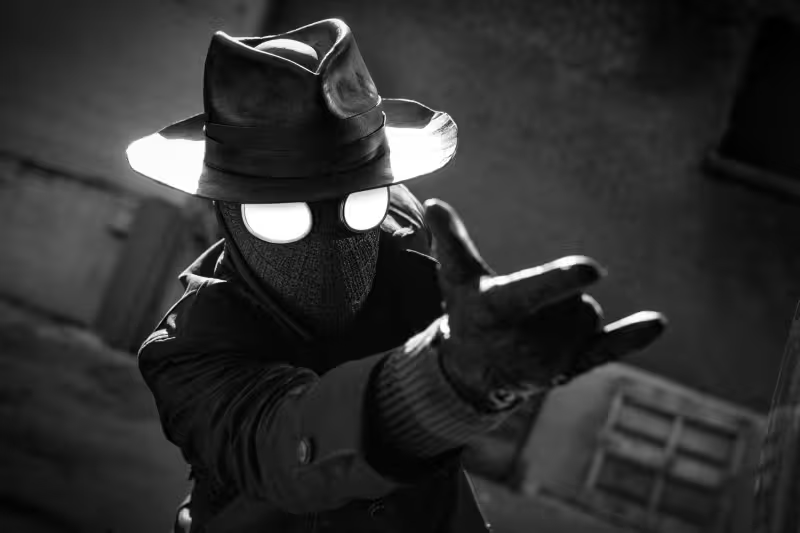
TheWrap’s review says Spider-Noir, the new live-action MGM+ and Prime Video series, reveals who the fedora‑wearing, wall‑crawling 1930s crimefighter is — and it does so with Nicolas Cage front and center as private eye Ben Reilly. Showrun by Oren Uziel, the series has been praised by that outlet as "a marvelous mesh of style, homage and deconstruction," and the review called it the year’s top TV treat so far.
Ben Reilly, as written on screen and played by Cage, is a haunted figure. In the series timeline he was New York’s only powered crimefighter in the 1920s, retired after failing to save the love of his life from a watery death, and now ekes out a living as a private eye. The plot leans on five years of history: after five years working together, his secretary Janet — played by Karen Rodriguez — knows about his uncanny ability to sense danger and his knack for snapping photos, but she has not been paid in months because Reilly drinks too much and does not catch enough cheating spouses to cover her wages.
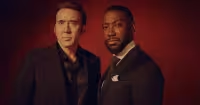
The cast around Cage is stacked with era pieces and pulp names given weight. Brendan Gleeson plays the bootlegging kingpin Silvermane; Li Jun Li is Cat Hardy, the owner and topline act of The Alcove speakeasy; and Karen Rodriguez’s Janet is the weary straight woman to Reilly’s excesses. The review notes the show is available in a colorized version as well as in rich vintage color or black‑and‑white visuals, a choice that underlines the series’ refusal to sit cleanly in one era or one genre.
Spider-Noir layers genre in a way the review frames as deliberate: it is a genre mash‑up of mystery, superhero and horror conventions built around an obscure Marvel property. TheWrap also points out that while the show reveals who the 1930s Spider is, that character is not the alternate universe Peter Parker from Marvel’s Spider‑Man Noir comics — and that the character had previously been glimpsed in animated TV shows and the Spider‑Verse movies. In other words, this is familiar material dressed to do something slightly different on camera.
The series opens with Cage’s Ben Reilly confessing lines that articulate the show’s moral center and its ache: "Ruby once told me that with great power comes great responsibility," Cage says, and then answers himself in the next beat: "Well, she was the greatest responsibility I ever had, and I failed her." Those two sentences — delivered as much as spoken — set the stakes for Reilly’s retirement, his alcoholism and his restlessness when one seemingly ordinary case forces him back into danger and face‑to‑face with Cat Hardy.
Cat Hardy’s bluntness undercuts noir coyness and signals the show’s tonal choices: "If you have something to say, say it. It’s too early for subtext," the character snaps, a line that lands as both a challenge to Reilly and a promise to the audience that Spider Noir refuses to hide behind style alone. The tension is at the heart of the series: a fedora‑wearing vigilante who should have been mythic is human, compromised and answered by a cast who hold him to account even as they profit from the myth.
What Spider Noir does, decisively, is turn an obscure corner of Marvel history into a character study with the trappings of pulp. It reveals the identity of the 1930s Spider as Ben Reilly and then uses that reveal to interrogate failure, responsibility and the cost of costume. With Oren Uziel steering the show and Cage’s performance anchored in regret, the series delivers the very thing its praise promises: a stylish, sometimes brutal reimagining that earns the label the review gives it — the year’s top TV treat so far — by making the mystery about character as much as about capes.