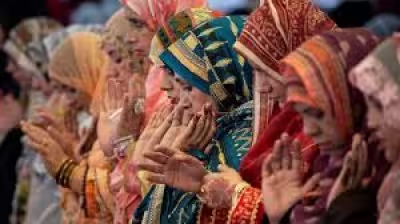




The Muslim Public Affairs Centre (MPAC) used the occasion of Eid-al-Adha to call on Nigeria’s leaders to urgently address worsening insecurity and deepening economic hardship, saying the country’s festivity has been hollowed by fear and need.
Disu Kamor, speaking for MPAC in its 1447AH Eid message, framed the appeal in moral terms: "As over two billion Muslims across the world gather in celebration of Eid-ul-Adha, humanity is once again confronted with two powerful realities — the timeless lesson of sacrifice taught by Prophet Ibrahim and the urgent need for compassion, justice and shared humanity in a deeply troubled world".
MPAC said Eid-ul-Adha goes beyond slaughtering animals and exchanging greetings and described the period as one that reflects sacrifice, compassion and justice. The organisation noted that the gathering of millions of pilgrims in Makkah for Hajj remains one of the greatest symbols of equality and submission to Allah, and said those ideals should inform how leaders respond to crises at home.
The charity’s message landed against a catalogue of threats that it said are now ordinary in Nigeria: kidnapping, banditry and violent attacks have made travel unsafe for many people during the festive period, MPAC said, forcing many who would normally reunite with family to stay away. The statement added that many households are struggling under severe economic pressure with little hope of immediate relief.
MPAC described insecurity in Nigeria as a continuing source of fear among citizens and urged leaders at all levels to prioritise policies that would restore security, protect lives and improve the economic wellbeing of citizens. The appeal was explicit about what must change: public safety and economic relief, MPAC said, should be treated as urgent public responsibilities.



At the same time MPAC broadened its critique beyond Nigeria. The organisation called the situation in Palestine "a painful tragedy and a stain on the conscience of the modern world," condemning "the continued destruction of homes, hospitals, schools and refugee shelters in Gaza." By tying the two issues together, MPAC placed local insecurity and global suffering on the same moral plane as it marked Eid-al-Adha (see Eid Mubarak 2026: Muslims observe Eid al-Adha on Wednesday, May 27, 2026 —
The numerical weight of MPAC’s framing is meant to sharpen its point: as over two billion Muslims mark the festival and as millions of pilgrims gather in Makkah, the movement of people and faith around the world highlights both deep inequalities and shared obligations, the group said. That was the contrast at the heart of MPAC’s message — rituals of sacrifice and equality that stand in stark relief to the fear and hunger experienced by many Nigerians.
There is a tension implicit in the plea. MPAC’s theology points to a communal duty of compassion and justice, but its public prescription is policy-focused: protect lives, restore security and relieve economic pressure. The gap between a moral call and the mechanics of policy is the friction in this story—MPAC can name what must change but cannot implement it. Its warning that travel is unsafe and that households cannot afford to celebrate exposes how quickly religious observance is overridden by basic insecurity and inflation.
For ordinary families the consequences are immediate: plans to reunite for prayers and meals dissolve under transport risks and rising costs. For national politics, MPAC’s message is a public measure of grievance from a faith-based organisation that ties spiritual teaching to civic obligation. If leaders do not respond with concrete steps to secure travel corridors, halt violent crime and ease cost-of-living pressures, MPAC’s conclusion is bleak: the lessons of sacrifice and justice commemorated during Eid-al-Adha will ring hollow against persistent fear and need.
MPAC closed its Eid message by insisting that the moral example symbolised by Prophet Ibrahim and the ritual equality of Hajj must be matched by action at home and abroad. The group’s appeal leaves one clear demand for those in power — translate the festival’s lessons into policies that protect people now, before another season of worship is overshadowed by the same fears.