




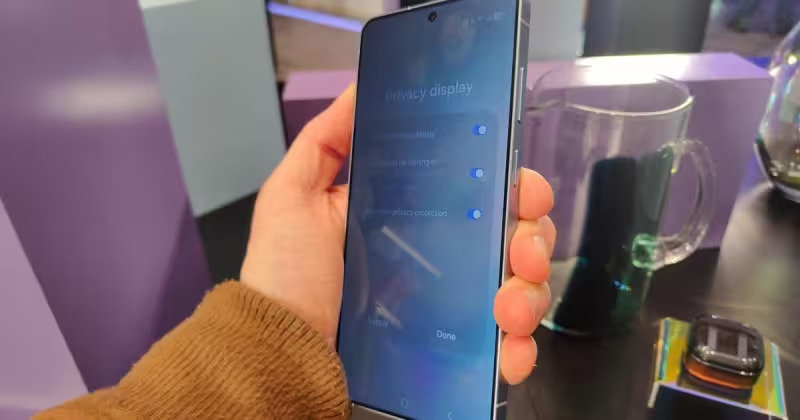
Xiaomi is reportedly developing a privacy-focused display feature designed to make screens harder to read from the side, a move the tip says could arrive with HyperOS 4 later this year.
The claim comes from technology commentator Yogesh Brar, who posted on X in 2026: "Xiaomi is working on a feature similar to Privacy Display that Samsung released with the Galaxy S26 Ultra." The post frames the effort as aimed at limiting so-called shoulder surfing by narrowing who can see what’s on a handset’s screen.
That matters because Samsung’s implementation on the Galaxy S26 Ultra is presented as the current benchmark. Samsung describes its Privacy Display as a hardware-integrated solution powered by Flex Magic Pixel, which controls light emission so the screen remains clear to the person looking straight at it while becoming difficult to read from side angles. Samsung’s version can be applied to the whole display or to specific areas, a flexibility the industry has pointed to as significant.
Brar’s tip links the Xiaomi feature to HyperOS 4 rather than to any single device, suggesting it could be delivered as part of the software update. HyperOS 4 is described in reports as based on Android 17, and the leak says the new privacy control would debut when HyperOS 4 ships later this year.



Those timing and technical notes are the weight of the report: a named public prediction that places Xiaomi in direct competition with Samsung on a privacy feature first shown on the Galaxy S26 Ultra. Round Time News has tracked related rollout stories, including our earlier coverage of Samsung software waves such as the One UI 8.5 rollout ( and device-related bundle moves like Spotify Premium for Galaxy A phones ( both of which show how fast vendor updates can spread once announced.
Context is simple and immediate: Samsung’s Flex Magic Pixel approach is hardware-driven. Reports framing Xiaomi’s work as part of HyperOS 4 imply a different path. If Xiaomi’s feature is implemented in software rather than via specialised display hardware, it would likely be less advanced than Samsung’s hardware-based system — a gap the leaks themselves acknowledge in comparing approaches. The broader reporting trend has shown several Chinese smartphone makers experimenting with anti-snoop or "spy screen" measures, and this tip fits that pattern.
But the story is not clean. The leak remains unconfirmed. Xiaomi has not confirmed anything about the feature. Linking the work to HyperOS 4 raises the possibility that the company will roll a privacy control across multiple devices in a single update, but it also opens the door to limitations: software-only methods can blur effectiveness on different panels and may be easier to defeat than hardware-level fixes. The tip’s lack of a device name — and the public source being a post on X rather than an official announcement — are notable friction points.
What happens next is straightforward: watch HyperOS 4. The tip places the debut "later this year," and the update is described as based on Android 17, which sets an expected technical baseline. If Xiaomi announces the feature formally, the company will need to show whether it matches Samsung’s ability to control light emission at the pixel level, or whether it offers a narrower, software-limited alternative. For consumers, the difference matters—software controls may help reduce casual shoulder surfing, but they are unlikely to match the side-angle opacity Samsung claims from Flex Magic Pixel.
Given what’s been reported and what is not yet confirmed, the most consequential unanswered question is whether Xiaomi will ship a software-only privacy mode or back it with display hardware changes. If it remains software-first, Xiaomi’s feature will broaden the market for privacy controls but probably will not displace the samsung galaxy S26 Ultra’s hardware benchmark.