




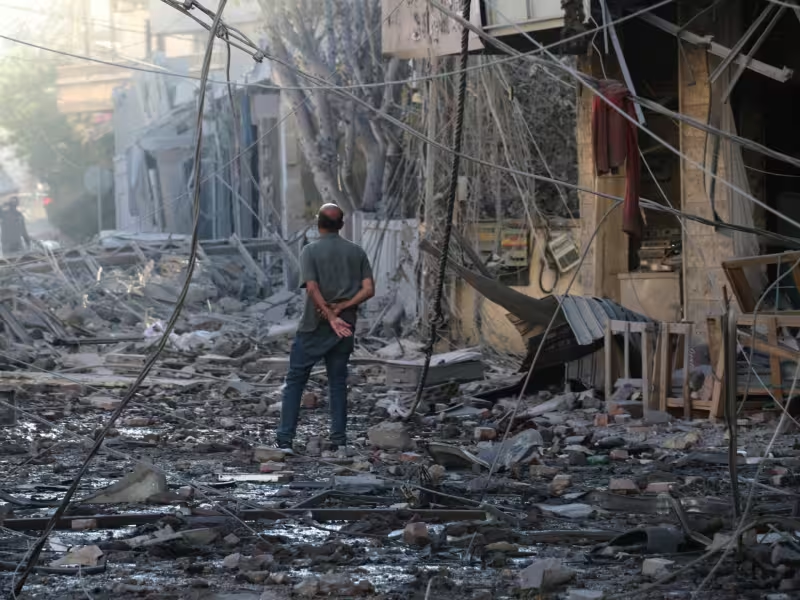
U.S. forces shot down four Iranian one‑way attack drones near the Strait of Hormuz and struck a military site in the strategic port city of Bandar Abbas, U.S. Central Command said, as Iran's Islamic Revolutionary Guard Corps said it targeted an American air base in the region in retaliation.
U.S. Central Command said the strike on the Bandar Abbas site came as it was about to launch a fifth drone, and that its actions were measured, purely defensive and intended to maintain the ceasefire. The command said it shot down four one‑way attack drones that posed a threat around the Strait of Hormuz.
Kuwaiti authorities reported having intercepted hostile missile and drone threats amid the exchanges, and Iranian media said explosions were heard to the east of Bandar Abbas after the U.S. action.
The sharpest turn in the exchange came when the IRGC said it had targeted an American air base that it described as the source of the Bandar Abbas attack; it did not name the base. Esmail Baqai, speaking for Iranian authorities, condemned the U.S. strikes as a violation of the ceasefire and said Iran would take all necessary measures to defend its national sovereignty. The statement came after the United States confirmed an earlier round of self‑defence strikes on southern Iran on Monday.
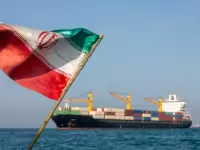
That earlier U.S. action targeted Iranian missile sites and boats it said were attempting to lay mines in the Strait of Hormuz. In the days that followed Washington imposed sanctions on the Persian Gulf Strait Authority and the U.S. Treasury Department warned that ships paying the authority could be exposed to the risk of sanctions. The Strait of Hormuz remains a central strategic artery: roughly one‑fifth of the world's liquefied natural gas and oil normally passes through it, and the conflict has already left thousands of commercial tankers stranded.
The messaging from the two sides contained an obvious friction point. U.S. Central Command framed its moves as narrowly defensive and designed to preserve the ceasefire, while Iran said the strikes were themselves a breach and responded by targeting a U.S. facility. Kuwait's interception of additional threats underscored how quickly the stand‑off can touch third parties in the Gulf. Outside commentators have framed Tehran's recent maritime posture as pressure on global shipping and on regional revenue streams; one critic described the Iranian military's latest moves as an attempt to extort global maritime trade, saying Tehran has grown "desperate for cash."
For now the United States insists its actions have been calibrated and defensive, and Iran's publicly stated response is a vow to defend sovereignty. Coverage, including on al jazeera news, has emphasized the central role of the Strait of Hormuz and the risk that renewed strikes will ripple through global energy markets.
Esmail Baqai's condemnation and the IRGC's claim that it struck a U.S. air base make the ceasefire between Washington and Tehran look fragile: both sides say they acted to protect vital interests, and both have shown they can strike targets in southern Iran and over the Gulf. That mutual capacity to hit military sites and maritime targets means the next move now matters far more than the statements — if either side follows rhetoric with a further kinetic step, the fragile truce is likely to collapse and the disruption to global shipping could deepen.