



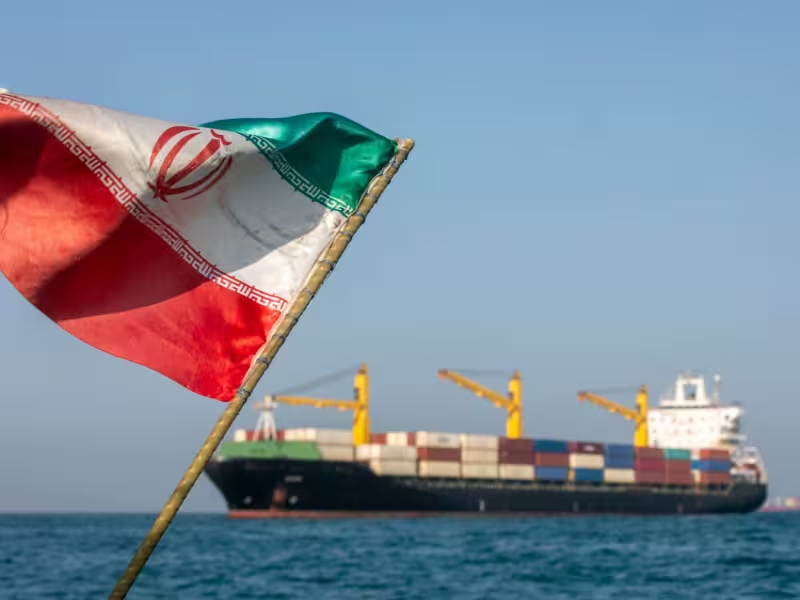
US forces launched strikes on southern Iran on Monday, hitting missile launch sites and boats the military said were attempting to place mines near the port of Bandar Abbas, the US Central Command said.
CENTCOM framed the action as self-defense to protect American troops. Its spokesman, Capt Tim Hawkins, said the US military "continues to defend our forces while using restraint during the ongoing ceasefire," and that the targets included missile sites and boats trying to emplace mines in an area close to the Strait of Hormuz.
Iran's state broadcaster reported several loud explosions near Bandar Abbas at around midnight local time and said local officials were investigating. When a UK broadcaster published its report, Iran had not yet responded to the US account; another news outlet later noted Iranian officials had not denied that missile launchers and boats had been struck.
The strikes came as top Iranian negotiators were in Doha for talks on extending a ceasefire that has paused almost three months of fighting. US forces said they carried out the strikes while the Iranian delegation held discussions in Qatar, and CENTCOM said the action was taken to protect US troops from threats posed by Iranian forces.
The talks in Doha have focused on reopening the Strait of Hormuz, Iranian stockpiles of highly enriched uranium and the mechanics of sanctions relief and frozen funds, according to an official briefed on the Iranian visit. The memorandum of understanding under discussion reportedly would extend the ceasefire for 60 days, reopen the strait and set a timetable for further negotiations over Iran's nuclear programme. Iran's central bank governor attended the Doha trip to discuss the possible release of frozen Iranian funds.
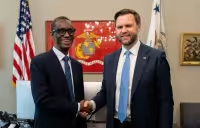
The strikes deepened an existing tension between negotiation momentum and military friction. Earlier in May, a clash between Iranian and US naval destroyers in the Strait of Hormuz prompted President Donald Trump to insist a ceasefire remained in place. At the weekend he said the sides were close to a deal and later said he had instructed negotiators "not to rush into" an agreement.
Senator Marco Rubio, speaking on Tuesday in Jaipur, said a deal was still possible but cautioned it could take several days because negotiators were haggling over precise language. "We'll see if we can make progress. I think it's a lot of talking back and forth going on about specific language in the initial document, so it'll take a few days," he said, urging that any final accord guarantee the straits remain open. He added bluntly that the negotiators face a binary outcome: "He's either going to make a good deal or no deal."
Iranian foreign ministry spokesman Esmail Baqai struck a cooler tone, saying a signing was "not imminent" even as he acknowledged that Tehran had reached conclusions on a large portion of the issues under discussion. Baghaei also told reporters that nuclear issues would only be negotiated after a framework accord had been agreed.
The strikes and the talks are unfolding against a backdrop of sensitive intelligence assessments and disputed narratives. US intelligence, according to reporting, believes Iran's Supreme Leader Mojtaba Khamenei is holed up in an undisclosed location, a detail that underlines the secrecy and stakes surrounding decision-making in Tehran. At the same time, negotiators in Doha reportedly spent parts of their meeting on highly technical questions such as how to verify limits on enriched uranium and the precise wording that would unlock frozen assets.
What happens next is consequential and immediate: negotiators say the language will take days to settle, but the US strikes have already altered the atmosphere. If Tehran views the strikes as a deliberate blow against its bargaining position, the window to convert the Doha conversations into the reported 60-day ceasefire extension and accompanying steps will narrow. The most important fact now is simple and unavoidable — the talks must survive the blow if the fragile pause and the promises on the Strait of Hormuz and frozen funds are to become reality.