




José Barcala walked into the Allianz Arena on the night Bayern Múnich hosted Barcelona for the first leg of the UEFA Women’s Champions League semifinals with a 4-2-3-1 on the team sheet and a clear message: adjustments matter.
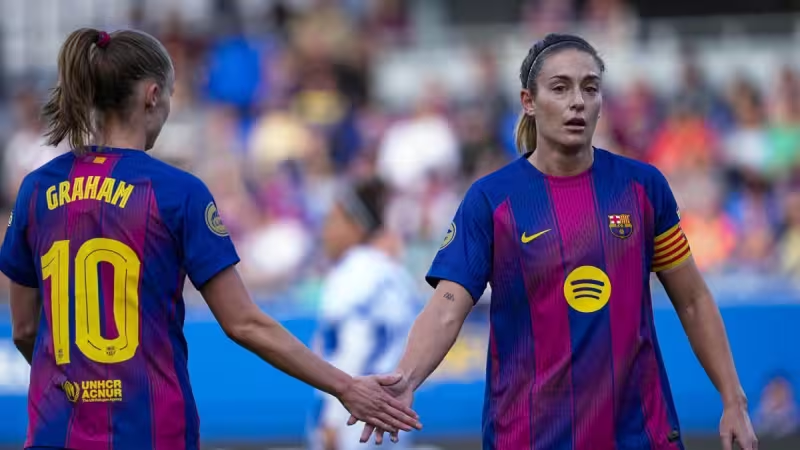
Barcala set Bayern up in a 4-2-3-1 and left Edna on the bench; across the pitch Pere Romeu named Cata Coll, Ona Batlle, Esmee Brugts, Mapi León, Irene Paredes, Patri Guijarro, Alexia Putellas, Vicky López, Graham Hansen, Ewa Pajor and Clàudia Pina in Barcelona’s starting lineup. Aitana Bonmatí did not appear on Barcelona’s squad list, though Patri Guijarro was available.
The figures underline the stakes: Barcelona had routed Bayern 7-1 in the league phase of this competition, and they arrive chasing a sixth consecutive final. Bayern arrive with domestic muscle — four consecutive league titles — but without ever having managed to get past the semifinal barrier in the Women’s Champions League.
Barcala framed those contrasts plainly before kickoff. "Ha servido en su momento. Ya forma parte del pasado, hemos aprendido lo que teníamos que aprender, nos ha servido para aprender la dificultad y exigencia de jugar contra rivales tan complicados como el Barcelona. No somos el mismo equipo, ellas también han evolucionado," he said, adding that "Partidos especiales requieren ajustes especiales" and that "Es un momento particular porque queremos llegar a la final. No es fácil."



Context matters here: Barcelona reached the semis after a near-perfect opening phase and a quarterfinal tie against Real Madrid. Bayern, by contrast, have dominated domestically but stumbled at this particular stage repeatedly. The last time Barcelona visited the Allianz Arena they left with a 3-1 defeat, a reminder that previous results do not guarantee outcomes on a different night.
The tension in the tie is straightforward and sharp. Barcelona’s 7-1 win in the league phase signals a level of dominance that frames them as favourites, yet their loss on their last trip to Munich and the absence of Aitana Bonmatí complicate the picture. Bayern’s coach insists the team has changed and learned from earlier encounters, but he also faces the pressure of a club that has yet to translate German league supremacy into a breakthrough in this tournament.
Tactics will be the lens through which this tie is decided. Barcala’s 4-2-3-1 is a deliberate choice against a Barcelona XI boasting experience and depth in key areas; Barcelona’s selection by Pere Romeu stacks the midfield and attack with names who have carried the club deep into Europe before. Leaving Edna on the bench was one concrete signal of how Barcala intends to manage personnel across 90 minutes and, crucially, two legs.
The semifinal is a two-legged tie, which means the Allianz Arena night is only chapter one. Barcelona want another final; Bayern want to clear a hurdle that has blocked them for seasons. The matchup is therefore a tactical test as much as a contest of form and personnel.
What happens next is the hard question: if Bayern can marry domestic dominance with the adjustments Barcala demands, they can finally break the semifinal ceiling; if Barcelona translate their earlier 7-1 authority into consistency across both legs, their run toward a sixth consecutive final will continue. Either way, the plot set at the Allianz Arena ensures the second leg will arrive with everything still to play for.